Thursday, August 4, 2022

"TRANSFORMERS" (2007) Photo Gallery

 kinopoisk.ru-Transformers-531356


Below are images from "TRANSFORMERS", the 2007 adaptation of the Hasbro toy line. Directed by Michael Bay, the movie starred Shia LaBeouf and Megan Fox:


"TRANSFORMERS" (2007) Photo Gallery

kinopoisk.ru-Transformers-476955


kinopoisk.ru-Transformers-512909


kinopoisk.ru-Transformers-512913


kinopoisk.ru-Transformers-512915


kinopoisk.ru-Transformers-512923


kinopoisk.ru-Transformers-531749


kinopoisk.ru-Transformers-531751


kinopoisk.ru-Transformers-532868


kinopoisk.ru-Transformers-542489


kinopoisk.ru-Transformers-542491


kinopoisk.ru-Transformers-564732


kinopoisk.ru-Transformers-564733


kinopoisk.ru-Transformers-564734


kinopoisk.ru-Transformers-567174


kinopoisk.ru-Transformers-567175


kinopoisk.ru-Transformers-567176


kinopoisk.ru-Transformers-567177


kinopoisk.ru-Transformers-567178


kinopoisk.ru-Transformers-567179


kinopoisk.ru-Transformers-580923


kinopoisk.ru-Transformers-580924


kinopoisk.ru-Transformers-775430

Friday, July 29, 2022

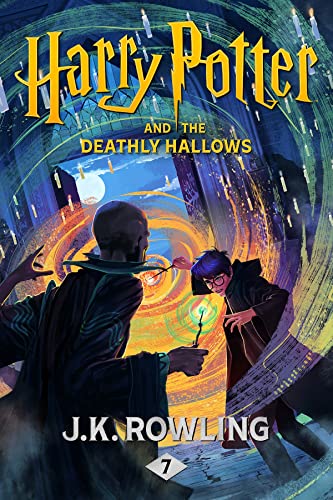
"HARRY POTTER AND THE DEATHLY HALLOWS" (2007) Book Review


"HARRY POTTER AND THE DEATHLY HALLOWS" (2007) Book Review

I usually do not post book reviews, but a great deal has been made about this last installment of J.K. Rowling’s "HARRY POTTER" series that I thought I might as well say something. I have only been a die-hard fan of the series since the release of the third movie, ”PRISONER OF AZKABAN” in 2004. I had also seen the first two movies in the theaters. I had enjoyed both, but it was the third film that had induced me to read the novels. Between ”AZKABAN” and the books, I became a die-hard fan. But this is not about the other stories. This is about the last . . . ”THE DEATHLY HALLOWS”


I am going to make this short. As much as I have enjoyed the series, I have come to the realization that I like the last five novels – starting with ”AZKABAN” more than I do the first two. I guess I find it easier to relate the increasingly ambiguous nature of the story. And if there is one thing I can say about ”THE DEATHLY HALLOWS” is that it is one hell of an ambiguous novel. In it, Harry Potter and his two friends – Ron Weasley and Hermoine Granger – truly start on their road to adulthood. And this, I believe, is the major strength of this novel.

By the time I came to the middle of the novel, I realized that for the first time in the series, most of its setting would take place away from Hogswarts. A part of me felt slightly disappointed that Harry, Ron and Hermoine did not reach the school until the last several chapters of the novel. On the other hand, I feel that this was the correct thing for Rowling to do. For me, ”THE DEATHLY HALLOWS” definitely seemed like a ”coming of age” story for our three protagonists. It was a maturity that they strongly needed in order to face the main villain, Lord Voldemort (aka Tom Riddle) and his Death Eaters. Looking back on the story, I do not think that Harry, Ron and Hermoine would have acquired their maturity and backbone if the story had mainly been set at Hogswarts. I think it was a very good move on Rowling’s part.

And our three heroes truly did grow. Hermoine learned to face her feelings for Ron and overcome that narrow-minded superiority that originally made her dismiss the legend of the Deathly Hallows. Ron learned to overcome his insecurity about his abilities as a wizard, his views on non-human magical creatures like house elves . . . and face his feelings for Hermoine. And Harry learned to overcome his tendency to play lone wolf and realize that people are not always what they seemed to be. The truths about Sirius’ treatment of Kreacher, Dumbledore’s past and his desires for powers, Snape’s feelings for Lily Potter and his true role in the war against Voldemort were powerful lessons for Harry. And I guess one could say they were powerful lessons for Ron and Hermoine, as well.

Of course, the deaths of Fred Weasley, Colin Creevy, Remus Lupin, Nymphadora Tonks and others were painful. But it were the deaths of Dobby and Severus Snape that really moved me to tears. And the trio’s painful adventures throughout the British Isles seemed like another version of Homer’s “ODYSSEY” that probably lifted this last installment almost to an epic quality. I only have three complaints about ”THE DEATHLY HALLOWS”:

a) Aside from Horace Slughorn, none of the Slytherins had participated in the battle. It annoyed me that Rowling went through all of that trouble to allow Harry not to judge others for superficial reasons . . . and yet, she insisted upon maintaining the clichés about the Slytherins that they could not be trusted;

b) I wish that Harry had revealed to the others – especially the other Death Eaters that Voldemort was a half-blood;

c) The final battle at Hogswarts seemed like one chapter too long at times. But what can one expect when it was interrupted twice – first by Snape’s death and past memories and later by Harry’s ghostly encounter with Dumbledore?


But ”THE DEATHLY HALLOWS” also had some great moments. Here are my favorites:

a) Bill and Fleur’s wedding was a hilarious family affair for the Weasleys, until Kingsley Shacklebolt’s patronus warned them of the encoming Death Eaters;

b) Harry, Ron and Hermoine’s adventures in London – including their break-in of the Ministry of Magic;

c) Ron’s return and Hermoine’s reaction;

d) The trio’s adventures at the Malfoy Manor and their reunion with Dobby, Ollivander, Dean Thomas and Luna Lovegood;

e) The trio’s escape from Gringotts on a blind dragon;

f) Harry and Hermoine’s creepy visit to Godric’s Hollow;

g) The trio’s visit to the Lovegood home;

h) The trio’s encounter with Albeforth Dumbledore;

i) The trio’s return to Hogswarts;

j) Ron and Hermoine’s first kiss;

k) Ginny’s birthday kiss to Harry;

l) The chapter on Snape’s memories of Lily Evans Potter and Albus Dumbledore – which in my opinion was my favorite in the entire novel.


I wonder if J.K. Rowling will write any other books, now that she has finished her opus on the boy wizard, Harry Potter. If she does, I hope that they will be as excellent as the seven novels that have entertained the public for the last decade. But if her next book or books are not as good, I will not hold it against her. After all, she did create Harry Potter for all of us to enjoy for years to come – in both the novels and the movies.

Monday, July 25, 2022

"SYLVIA" (2003) Review


"SYLVIA" (2003) Review

I finally watched "SYLVIA", the 2003 biography on poet Sylvia Plath, on DVD. After all I have heard about the movie, I had expected to be disappointed by it. To be truthful, I found it quite interesting biopic that was especially enhanced by the leads' performances. But . . . "SYLVIA" was not a perfect film.

Set between the mid-1950s to the early 1960s, "SYLVIA" told the story of Plath's marriage to fellow poet, British-born Ted Hughes, their tumultuous relationship and her struggles to maintain a career. The movie's revelation of the Plath/Hughes courtship, followed by their marriage turned out to be very interesting and rather intense. "SYLVIA" also did an excellent job in re-capturing the literary and academic world in both the United States and Great Britain that Plath and Hughes interacted with during the 1950s and early 1960s.

I suspect that many had expected John Brownlow's screenplay to take sides in its portrayal of the couple's problems and eventual breakup. To Brownlow and director Christine Jeffs' credit, the movie avoided this route. There were no heroes/heroines and villains/villainesses in their story . . . just two people who had failed to create a successful marriage. "SYLVIA" revealed that Hughes' infidelity with married writer and poet, Assia Wevill, the critical indifference of the male-dominated literary world and her own bouts with depression made life difficult for Plath during her last years. At the same time, the movie made it clear that Hughes struggled to deal with a depressed and suicidal wife. In the end, the movie presented the possibility that both Plath and Hughes had contributed their breakup.

To be honest, I think that Gwyneth Paltrow and Daniel Craig's performances as Sylvia Plath and Ted Hughes had more to do with the movie's main virtue than Jeffs' direction or Brownlow's script. director, Christine Jeffs or the screenwriter, John Brownlow. Also, the movie featured some first-rate performances from the supporting cast. All of them - Jared Harris as poet/literary critic Al Alvarez; Blythe Danner as Aurelia Plath, Sylvia's mother; Amira Casar as Wevill; and Michael Gambon as Teacher Thomas, a neighbor of Sylvia's; gave able support. But it is obvious that this movie belonged to Paltrow and Craig, who conveyed the intensity of the Plath/Hughes marriage with an honesty and rawness that I sometimes found hard to bear.

But even those two were not able to save the movie's last half hour from almost sinking into an abyss of unrelenting boredom. I suspect that Jeffs and Brownlow wanted to give moviegoers an in-depth look at Plath's emotional descent into suicide, following the break-up of her marriage to Hughes. But I wish they could have paced the movie's ending a little better than what had been shown in the finale. The movie's last half hour nearly dragged the story to a standstill.

Despite the last half hour, I would still recommend "SYLVIA". In the end, it turned out to be a pretty interesting look into the marriage of the two famous poets, thanks to director Christine Jeffs, John Brownlow's screenplay and a first-rate cast. But I believe that performances of both Gwyneth Paltrow and Daniel Craig proved to be the best aspects of the film.


Saturday, July 23, 2022

"FROM RUSSIA WITH LOVE" (1963) Photo Gallery

 FromRussiaWithLove1963-09_zps8e7604d2


Below are images from the 1963 James Bond movie, "FROM RUSSIA WITH LOVE".  Based upon Ian Fleming's 1957 novel and directed by Terence Young, the movie starred Sean Connery as James Bond:


"FROM RUSSIA WITH LOVE" (1963) 50TH ANNIVERSARY PHOTO GALLERY

29qmyo2


7182520215_178199cea7_z


Bond_1963_From_Russia_With_Love_2


from_russia_with_love_4


from_russia_with_love_6


From_Russia_With_Love_27128_Medium


from-russia-with-love


fromrussiawithlove8


From-Russia-with-Love-1963-3


from-russia-with-love-gun2


j6hqts


kinopoisk_ru-from-russia-with-love-920248


Lotte Lenya 3


Rosa Klebb


Rosa-Klebb


tumblr_lxldon7JYv1r93693o1_500


tumblr_mdc3v7oA9D1rw9l47o1_500

Tuesday, July 19, 2022

List of Historical Fiction Series


Below is a list of popular historical novels that are a part of a series:


LIST OF HISTORICAL FICTION SERIES


1. The Forsyte Saga (1906-1921) by John Galsworthy - Nobel Prize winning author John Galsworthy wrote and published a series of three novels and two interludes about members of an upper middle-class English family between the 1870s and 1920s.


2. Poldark Saga (1945-2002) by Winston Graham - Set between 1783 and 1820 is a series of twelve novels about a former British Army officer and Revolutionary War veteran, his struggles to make a new life and renew his fortunes following his return to Cornwall after the war.


3. The Asian Saga (1962-1993) by James Clavell - This series of six novels centered on Europeans - especially the Struans-Dunross family - in Asia and the impact of both Eastern and Western civilization between the the early 17th century and late 20th century.


4. The Raj Quartet (1966-1975) by Paul Scott - Paul Scott wrote this four-novel series about a group of Europeans during the last five years of the British Raj in India.


5. Flashman Papers (1969-2005) by George MacDonald Fraser - Journalist George MacDonald Fraser wrote a series of novels about the exploits of a cowardly British Army officer during the Victorian Age, between 1839 and 1894. The Harry Flashman character was originally a minor character in Thomas Hughes' 1857 novel, "Tom Brown's School Days".


6. Beulah Land Trilogy (1973-1981) by Lonnie Coleman - This three-volume series told the saga of a Savannah belle named Sarah Pennington Kendrick and her years as mistress of a Georgia cotton plantation called Beulah Land, between the early Antebellum Era and the late Gilded Age.


7. The Kent Family Chronicles (1974-1979) by John Jakes - Also known as "the Bicentennial Series", author John Jakes wrote a series of eight novels to commemorate the United States' 200th Bicentennial that centered on the experiences of the Kent family from 1770 to 1890.


8. American Civil War Trilogy (1974; 1996-2000) by Michael and Jeff Shaara - Michael Shaara wrote the Pulitzer Prize winning novel, "The Killer Angels" in 1974, which was about the Battle of Gettysburg during the Civil War. A few years after his death, his son Jeff wrote both a prequel (set during the first two years of the war) and a sequel (set during the war's last year); creating a trilogy of the three novels.


9. The Australians Series (1979-1990) by William Stuart Long - Set between the late 18th century and the late 19th (or early 20th) century, this literary series followed the experiences of the Broome family in Australia and other parts of the British Empire.


10. North and South Trilogy (1982-1987) by John Jakes - John Jakes wrote this literary trilogy about the experiences of two families - the Hazards of Pennsylvania and the Mains of South Carolina - between 1842 and 1876.


11. The Savannah Quartet (1983-1989) by Eugenia Price - The four novels that make up this series is centered around a Northerner named Mark Browning who moves to the birthplace of his Savannah-born mother and his relationships with his family, friends and neighbors between 1812 and 1864.


12. Wild Swan Trilogy (1984-1989) by Celeste De Blasis - Set between 1813 and 1894, this literary trilogy focused on a young English immigrant named Alexandria Thaine, her two husbands and her descendants in England and Maryland.


13. Outlander Series (1992-Present) by Diana Gabaldon - This current literary series focuses upon a World War II nurse named Claire Randall, who embarks upon a series of adventures after she travels back in time and fall in love with an 18th century Highland warrior named Jamie Fraser.

"NORTH AND SOUTH" (1975) Photo Gallery

  Below are images from  "NORTH AND SOUTH" , the 1975 BBC adaptation of Elizabeth Gaskell's 1855 novel. Directed by Rodney Ben...