Friday, January 26, 2024

"HOUSE OF CARDS" Season One (2013) Photo Gallery

 344_1hoc_ph_22120r_copy


Below are images from Season One of "HOUSE OF CARDS", Netflix's television remake of the 1990-1995 BBC miniseries trilogy that was based upon Michael Dobbs' 1989 novel. Produced and developed by Beau Willimon, the series starred Kevin Spacey and Robin Wright:


"HOUSE OF CARDS" SEASON ONE (2013) Photo Gallery

1115_mara_640


abstinence house of cards


cardszoedesperateff2013


004-house-of-cards-theredlist


enhanced-buzz-6162-1362025037-8


enhanced-buzz-8916-1362024957-0


hocs01e08-0333


esq-house-of-cards-de


2D11884376-140304-reg-cathey-house-of-cards.blocks_today_desktop_tease


houseofcards01


House-Of-Cards-008


hocs01e09-0218


house-of-cards-chapter-2-cambio-piezas-l-9g3a0_


Tim_page


house-of-cards-netflix


HOUSE-OF-CARDS-STOLL


Kevin-Spacey-House-of-Cards-Netflix


kinopoisk.ru-House-of-Cards-2121201


o-HOUSE-OF-CARDS-570


kinopoisk.ru-House-of-Cards-2134312


kinopoisk.ru-House-of-Cards-2138616


kinopoisk.ru-House-of-Cards-2156600


mcraney_house_cards


MV5BMTcwMzUzODYxMV5BMl5BanBnXkFtZTcwOTIwMDk5OA@@._V1._SX640_SY427_


kinopoisk.ru-House-of-Cards-2333294


sadrusso


Trailer__House_of_C_377951a

Tuesday, January 23, 2024

Top Five Favorite "MAD MEN" Season Two (2008) Episodes


Below is a list of my top five (5) favorite episodes from Season Two (2008) of "MAD MEN". Created by Matthew Weiner, the series starred Jon Hamm: 


TOP FIVE FAVORITE "MAD MEN" SEASON TWO (2008) Episodes

1 - 2.08 A Night to Remember

1. (2.08) "A Night to Remember" - During this game-changing episode, copywriter Peggy Olson agrees to help a friendly priest named Father Gill create a promotion for a Church-sponsored dance. Office manager Joan Holloway helps Television Advertiser Harry Crane read new television scripts and discovers that she likes the job. Still reeling from comedian Jimmy Barrett's revelation of Don Draper's infidelity, Betty Draper helps her husband with an important business dinner, before she later confronts him about his affair with Bobbie Barrett.


2 - 2.05 The New Girl

2. (2.05) "The New Girl" - Don and Bobbie heads out of the city for a night together, before getting into a traffic accident. Don recruits Peggy to help him cover up the incident. Meanwhile, a new Sterling-Cooper secretary named Jane Siegel begins working for Don.


3 - 2.04 Three Sundays

3. (2.04) "Three Sundays" - Over the Easter holidays, Don and Betty clash over the discipline of their son Bobby. Peggy meets the new family priest, Father Gill. And Head of Advertising Duck Phillips recruits the agency in an effort to win over American Airlines as a new client.


4 - 2.07 The Gold Violin

4. (2.07) "The Gold Violin" - Art director Sal Romano develops a case of unrequited attraction for Accounts man Ken Cosgrove. Joan and Jane clash over an incident regarding a new painting in owner Bert Cooper's office. And Betty learns about Don's affair with Bobbie Barrett at a media party, thanks to her husband Jimmy.


5 - 2.09 Six Month Leave

5. (2.09) "Six Month Leave" - Owner Roger Sterling leaves his wife for Jane Siegel. Senior copy Freddie Rumsen's alcoholism spirals out of control. And the death of Marilyn Monroe has an impact upon the firm's female employees.


Monday, January 15, 2024

"TAP ROOTS" (1948) Review


"TAP ROOT" (1948) Review

I am sure that many are aware of Mississippi-born Confederate soldier-turned-Unionist Newton Knight and his formation of the "Free State of Jones", which opposed Confederate forces during the U.S. Civil War. I first heard about Knight and his men while watching Ken Burns' 1990 documentary, "THE CIVIL WAR". But I had no idea that knowledge of this little corner of Civil War history went back even further.

Recently, Hollywood released a movie version about Knight and his followers in the 2016 historical drama, "FREE STATE OF JONES". However . . . some seventy-four years earlier, a novel titled "Tap Roots", which had been written by James H. Street, hit the bookstores. It told the story of a cotton planter, his family and a newspaper publisher; who had decided to remain neutral during the first year of the Civil War. Unfortunately, their decision to remain neutral led to disastrous consequences for the planter and his family, along with other local men who decided to follow them. Six years later in 1948, Universal Pictures made a movie adaptation of Street's novel.

In a nutshell . . . "TAP ROOT" begins in the fall of 1860. Northern Mississippi plantation owner Big Sam Dabney and his son Hoab express concern over Abraham Lincoln's election as the 16th president and the possibility of Southern states seceding from the Union. Both men begin to consider having Levington County in Lebanon Valley, location of the family's cotton plantation, remain neutral if a civil war breaks out. Meanwhile, Hoab's older daughter, Morna Dabney, becomes engaged with Army officer, Clay McIvor. Younger sister Aven is jealous, due to also being in love with Clay. As for Morna, local newspaper owner Keith Alexander becomes attracted to her.

Before 1860 ends, Big Sam dies, leaving Hoab in full control of the family's neutral stance. And poor Morna has a riding accident, leaving her physically disabled and her engagement to Clay in jeopardy. Apparently, the latter is unable to maintain interest in a disabled woman and transforms his sexual interest to Morna's younger sister, Aven. This gives Keith the opportunity to court Morna and help her recover from Clay's rejection. However, Mississippi secedes from the Union, driving Hoab, Keith and the Dabney family's Choctaw friend, Tishomingo, to organize Levington County's neutral stance and secession from Mississippi.

There are aspects of "TAP ROOTS" that I found admirable. Alexander Golitzen's production designs for a Northern Mississippi community between 1860 and 1861 struck me as pretty admirable, if not mind blowing. I could say the same about Yvonne Wood's costume designs. However, there were some signs of 1940s fashion getting in the way, especially in the men's costumes. The shoulders for Van Heflin's jackets struck me as so wide that I found myself wondering if he had portrayed a time traveler from the 1940s. On the other hand, I found Winton C. Hooch and Lionel Lindon's photography of the Southern California and North Carolina locations rather beautiful, thanks to its sharp color. And I thought director George Marshall did an admirable job with the film's action scenes. I was especially impressed by the final conflict between Levington County's "rebels" and the local Confederate forces. Between Marshall's direction, Hooch and Lindon's photography, and Milton Carruth's editing, that final action sequence proved to be one of the film's finer aspects.

If I must be honest, I did not have any problems with the performances featured in "TAP ROOTS". Well . . . with most of the performances. Van Heflin gave an entertaining, yet commanding performance as the cynical newspaper editor Keith Alexander. Susan Hayward was equally commanding as Southern belle Moana Dabney, who endured her own trials while her own personal life fell apart. I did not care for the character of Clay McIvor, who struck me as something of a jerk; but I cannot deny that Whitfield Connor did a solid job in bringing his character to life. A very young Julie London really held her own as Moana's younger sister, Aven Dabney, who managed to win Clay's love from Moana, following the latter's riding accident. Russell Simpson gave a entertaining performance as Moana's colorful grandfather, Big Sam Dabney. Ruby Dandridge, mother of Dorothy Dandridge, gave a solid performance as the Dabneys' housekeeper, Dabby. And I can say the same about Richard Long's portrayal of Moana's younger brother, Bruce Dabney; Arthur Shields as Reverend Kirkland; and Sondra Rogers as Shellie Dabney.

Despite the solid performances that permeated "TAP ROOTS", two of them proved to be problematic for me. First, there was Ward Bond's portrayal of Hoab Dabney, the Mississippi planter who not only inherit the family's cotton plantation following his father's death, but also the latter's plans for a neutral Mississippi. I might as well say it. I found Bond's performance to be an exercise in histrionics. I found this surprising since Bond has never struck me as a hammy acting. I wish that director George Marshall had found a way to rein in his acting - especially in one scene in which Hoab came into conflict with Moana over her past relationship with Clay McIvor. Alas, I thought Bond gave his hammiest performance in that one scene. The other problematic performance came from Boris Karloff, who portrayed the Dabney family's Choctaw friend and retainer, Tishomingo. Mind you, Karloff gave a competent and subtle performance as one of the few sensible characters in this movie. And although many may have been put off by a British actor portraying a Native American, I was surprised to discover that Karloff had possessed both English and East Indian ancestry from both of his parents. I do not know if that gave the actor a pass, considering he still lacked any Native American ancestry. But if I really had a problem with Karloff's performance is that he had portrayed Tishomingo as if the character was an Englishman. Even if Karloff had been portraying a white American, I still would have found his performance slightly problematic.

And what about the narrative for "TAP ROOTS"? Did I like it? Honestly? No. For me, the 1948 movie had failed to impress me. And this is a pity. I believe the problem stemmed from the movie's original source, the 1942 novel. Author James H. Street had claimed he was inspired by the life of Newton Knight, when he wrote his novel. However, out of fear that Knight's life was too controversial - namely his common-law marriage to former slave Rachel Knight - Street changed the nature of Knight's story. The leading characters of "TAP ROOTS" were portrayed as members of Mississippi's planter class. They opposed slavery - at least one or two characters had claimed this - but also owned slaves. But aside from the Dabneys' "faithful" housekeeper Dabby, all other slaves were minor characters who barely spoke. If a movie is going to have its main characters claim to be anti-slavery, why ignore the topic for the rest of the film? Newton Knight's grandfather was a major slave owner in northern Mississippi during the early 19th century. But Knight and his father had opposed slavery and became yeoman farmers who never owned slaves. Knight had been an Army deserter and managed to successfully opposed the Confederate authority in Jones County between 1863 and 1865. The Daubey family and Keith Alexander had no such success in "TAP ROOTS". And I never understood this. Why did Street and later, the movie's writers did not follow Knight's Civil War experiences? What was the point of creating this story if they were not willing to closely follow Knight's conflict with the Confederate authorities? Why not allow the Daubey family to be yeoman farmers who opposed slavery? Street and the filmmakers could have still kept out Newton Knight's relationship with Rachel Knight.

Instead, I found myself watching a movie in which the main protagonists claimed they opposed slavery, yet practiced it and barely touched upon the subject for most of the film. The movie literally dragged its feet between Abraham Lincoln's election in November 1860 and the outbreak of the Civil War in April 1861. And although I disliked Moana Dabney's romance with the unworthy Clay McIvor, I found Keith Alexander's "courtship" of her rather troubling. In Keith's attempt to get Moana to forget about Clay, he resorted to bouts of manhandling her that seemed to border on sexual assault. For some reason, this reminded me of the Scarlett O'Hara/Rhett Butler relationship from "GONE WITH THE WIND". And not in a good way. I also had a problem with the film's portrayal of Lebanon Valley's citizens. I noticed that the film seemed to portray them as mindless citizens who followed the Dabneys' anti-Confederate stance without any real explanation. Like the Dabney slaves, Hoab's followers lacked any real agency. Did author James Street, along with the filmmakers of this movie really lacked the courage to convey a story about how a Southern-born yeoman farmer and others from his class had successfully fought against the Confederacy? Or even exploring his anti-slavery stance? Back in the 1940s?

In the end, this is my real problem with "TAP ROOTS". James Street and producer Walter Wanger took a historical event from the Civil War and used fiction - a novel and its Hollywood adaptation - to render it toothless. Its main historical figure Newton Knight had been transformed into a borderline hysterical and controlling cotton planter and member of the elite. The story failed to explore what led many of the planter's combatants to follow him. The story barely touched upon the topic of anti-slavery, while including slaves as minor and background characters. And the movie dumped some tepid attempt at a "GONE WITH THE WIND" clone romance to keep movie goers interested. The movie had some virtues. But in the end, the movie's vague adaptation of Newton Knight's Civil War experiences simply fell flat. I hope and pray I am never inclined to watch this film again.


Saturday, January 6, 2024

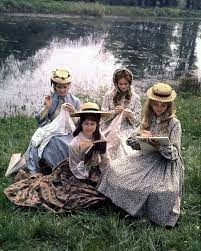
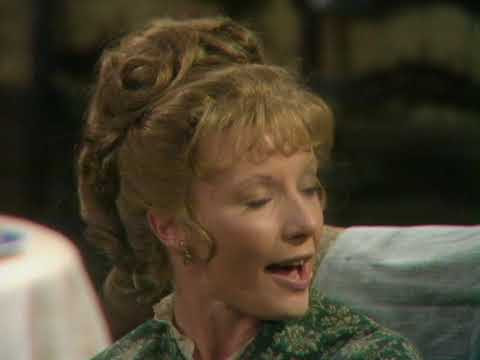
"LITTLE WOMEN" (1970) Photo Gallery


Below are images from "LITTLE WOMEN", the BBC's 1970 adaptation of Louisa May Alcott's 1868-69 novel.  Directed by Paddy Russell, the nine-part miniseries starred Angela Down, Jo Rowbottom, Janina Faye, Sarah Craze and Stephen Turner:


"LITTLE WOMEN" (1970) Photo Gallery


Wednesday, January 3, 2024

"STAR TREK VOYAGER": Unfit For Command?


"STAR TREK VOYAGER": UNFIT FOR COMMAND?

Do many STAR TREK fans consider most Vulcan characters unfit for command? I wonder. I came across this ”STAR TREK VOYAGER” fan fiction story about the letters written to the Alpha Quadrant by Voyager’s crew in the Season One episode, (1.07) "Eye of the Needle". The author of this particular fan fiction story seemed to believe that because of their emotional distance, Vulcans are basically unfit for command. Personally, I disagree.

This belief that Vulcans were unfit for command certainly seemed supported by Lisa Klink’s screenplay for the Season Two episode, (2.25) ”Resolutions”. I am sure that many recall this episode. In it, the Voyager crew is forced to leave Captain Janeway (Kate Mulgrew) and Commander Chakotay (Robert Beltran) behind on a planet after the pair found themselves infected by an incurable disease. Lieutenant Tuvok (Tim Russ) assumes command of the ship and ends up facing a possible mutiny led by a very distraught Ensign Kim (Garrett Wang). Klink’s screenplay portrayed Tuvok as a cold by-the-book officer, incapable of noticing or understanding the crew’s uneasiness of leaving behind the captain and first officer. Quite frankly, not only did I dislike this one-dimensional portrayal of the ship’s highest ranking Vulcan, I found it slightly inaccurate.

As a Vulcan, Tuvok has made it a practice to keep his emotions to himself and lead his life in a very logical manner. But this does not mean that he was exactly how Klink had described him in ”Resolutions”. Underneath the cool exterior laid a very emotional and passionate man who loved his wife and family a great deal and considered Kathryn Janeway a great friend. He also possessed a temper that he obviously must have struggled to contain all of his life.

Tuvok did possess a problem with interacting with others. This stemmed from a tendency to be a loner. This trait of his was specifically pointed out in the Season Three episode, (3.14) ”Alter Ego”. In it, Harry Kim became infatuated with a hologram (a tall and leggy blonde named Marayna). To deal with his infatuation, he turned to Tuvok to help him recover from it. Tuvok did more than that. He became friendly with the hologram. But the hologram proved to be a lonely alien at a space station who used superior technology to prevent Voyager from leaving a particular area of space. When Tuvok pointed out her loneliness, she returned the favor:


MARAYNA: I don't believe you.

TUVOK: I beg your pardon.

MARAYNA: I think you're tying to isolate yourself and make a public protest at the same time.

TUVOK: Explain.

MARAYNA: You didn't want to be here in the first place. Being the only one without a lei sets you apart from the others, allowing you to symbolically maintain your solitude. And since everybody can see that you're the only one without a lei, you're letting them know that you'd rather be somewhere else.

TUVOK: Your logic is impeccable.


But Tuvok’s loner tendencies did not mean that he lacked an ability to understand the emotional needs of others. Even before ”Resolutions” had aired, Tuvok managed to display this trait on a few occasions. He was the first member of the crew to sense that Seska might prove to be a dangerous problem for the crew . . . even if he did not know about her being a Cardassian spy. Instinct told him that Tom Paris may have been innocent of the murder of a Banean scientist in (1.08) ”Ex-Post Facto”. In (2.04) ”Elogium”, he expressed compassion for Neelix’s fear at becoming a parent and helped the latter come to a decision about starting a family with Kes. He was the only one who did not allow his fear or paranoia to get the best of him and realized that fighting the entity that was rearranging Voyager’s structure might prove to be the best thing in (2.06) ”Twisted”. He managed to befriend Kes. In (2.22) ”Innocence”, he managed to offer comfort to a dying Voyager crewman and a group of alien children who had been abandoned to die by their kind. And for a man who was supposed to be an incompetent leader, he sure as hell managed to avoid any problems with leading the Security/Tactical Division.

If there is one scene before ”Resolutions” that provided an excellent example of how compassionate Tuvok can be, one might as well return to his scene with the dying Ensign Bennet in ”Innocence”:


TUVOK: Tuvok to Voyager. Voyager, do you read? You must lie still.

BENNET: I can't, I can't feel my legs.

TUVOK: Several of the vertebrae have been fractured.

BENNET: Isn't there anything you can do?

TUVOK: I'm afraid the shuttle's medical supplies are inadequate. We must wait for Voyager to find us.

BENNET: It's getting worse. My whole body feels numb.

TUVOK: I want you to slow your breathing, relax your muscles. Try not to move.

BENNET: All this time I thought I was so lucky with no family back home. Nobody to miss. Now it seems kind of sad not to leave anybody behind.

TUVOK: I believe Ensign McCormick would miss you a great deal.


I realize that Lisa Klink wanted to create some kind of conflict between Tuvok and some of the crew in ”Resolutions”. But in painting Tuvok as an emotional iceberg incapable of compassion or seeing to the needs of others, I feel that she had went too far. This is quite evident in that the mutinous and obviously immature Harry Kim had been written with far more sympathy than Tuvok. It is no wonder that ”Resolutions” has become one of my least favorite ”VOYAGER” episodes.

Thursday, December 21, 2023

"THE COUNT OF MONTE CRISTO" (1934) Review

tumblr_mkmu7tGvhY1qbsi4oo2_1280 


"THE COUNT OF MONTE CRISTO" (1934) Review

I have seen only two versions of Alexandre Dumas père's 1845 novel, "The Count of Monte Cristo" in my past - the 1975 television version with Richard Chamberlain and the 2002 Disney film with James Cavielzel. While reading a good number of articles about the movie versions of the novel, I came across numerous praises for the 1934 adaptation that starred Robert Donat. And since I happened to like Dumas' story so much, I decided to see how much I would like this older version.

Set between the last months of the Napoleonic Wars and the 1830s, "THE COUNT OF MONTE CRISTO" told the story of merchant sailor Edmond Dantès becomes a victim of French political machinations and personal jealousy after his dying captain Leclère, a supporter of the exiled Napoléon I, charges him to deliver a letter from the exiled former emperor to an unknown man in Marseilles. Thanks to the first mate Danglars, who is jealous of Dantès' rapid rise to captain; an ambitious city magistrate named Raymond de Villefort, Jr., who wants to stem a possible family scandal, due to his father being identified as the man to whom Napoléon had written the letter; and his best friend Fernand Mondego, who is in love with Dantès' fiancée, Mercedes de Rosas; Dantès ends up on an island prison called Château d'If. There, he meets a fellow prisoner, a priest and a former soldier in Napoleon's army named Abbé Faria. Faria educates Dantès and informs the latter a fabulous hidden treasure before he is killed in a cave-in. Dantès escapes from the prison and befriends a group of smugglers that include a thief named Jacopo. They find the treasure that Faria had talked about, and Edmond uses it to establish the persona of the Count of Monte Cristo. He hopes to avenge himself against those who had betrayed him – Danglars, Villefort, Mondego. He also learns that Mercedes had married Mondego not long after his imprisonment.

Many critics have labeled this movie as the best adaptation of Dumas' novel. Is it the best? It all depends on individual preference. I do know that I enjoyed "THE COUNT OF MONTE CRISTO" very much. The movie benefited from solid writing by director Rowland V. Lee, Philip Dunne and Dan Totheroh, despite some of the changes they made from the novel. "THE COUNT OF MONTE CRISTO" benefited from a script that balanced action with drama. I found it interesting that most of the action occurred in the movie's first half - before Dantès' transformation into the Count of Monte Cristo. Aside from a brief duel between Dantès and Mondego, most of the second half seemed dominated by drama and Dantès' schemes. My favorite scheme centered around Dantès' exposure of Mondego's murderous actions against I have no problem with this . . . to a certain extent. One of the major differences between this movie and Dumas' novel is the romance between Dantès and Mercedes. Unlike the novel, the pair eventually reconcile with each other, following the death of Mercedes' husband. Frankly, I am glad that Lee and the other two screenwriters made this change. As much as I admired Dumas' bittersweet ending to Dantès and Mercedes' relationship, I have always found it somewhat . . . disappointing. That disappointment was eliminated when the screenwriters allowed the couple to spend their remaining years together.

However, I do have my complaints regarding "THE COUNT OF MONTE CRISTO". Although the movie seemed to be balanced between action and drama, I would have preferred if that balance had been maintained throughout the film. If it were not for Dantès' schemes against his enemies - especially Fernand Mondego - I would have been bored with the movie's second half. It did not help that I found Dantès' duel with Mondego rather dull. Even worse, the screenwriters decided to be faithful to Dumas' novel by having the duel before Dantès' acts of vengeance against Danglars and de Villefort. For once, I wish they had not been so faithful. And honestly . . . I wish the screenwriters had found another way for Dantès to exact revenge upon de Villefort other than prematurely exposing himself . . . an act that led to his arrest and trial. Because I did not find this method particularly satisfying.

I certainly have no complaints about the performances in "THE COUNT OF MONTE CRISTO". There were performances that I found solid, but not particularly interesting. Among them are Irene Harvey and Douglas Walton as the two young lovers - Valentine de Villefort and Albert Mondego; Luis Alberni as Jacopo; Lawrence Grant as a slightly hammy de Villefort Sr.; and Georgia Caine as Mercedes' mother. Louis Calhern, Sidney Blackmer and Raymond Walburn as Dantès' three nemesis - Raymond de Villefort Jr., Ferdinand Mondego and Baron Danglars. I was especially impressed by Calhern's subtle performance. And I was very impressed by O.P. Heggie's emotional, yet wise take on the Abbé Faria. However, Robert Donat and Elissa Landi gave, in my opinion, the best performances in the film. For me, they were the heart and soul of "THE COUNT OF MONTE CRISTO". Both Donat and Landi managed to skillfully develop their characters from the innocent young lovers to the embittered ex-convict and his long-suffering former fiancée, who young lives had been unraveled by the capriciousness of three men. One of my favorite scenes in the movie featured their reunion after nearly twenty years apart. I found it both tense and emotionally satisfying.

There are some aspects of "THE COUNT OF MONTE CRISTO" that prevents it from becoming a big favorite of mine. But I cannot deny that it is a well-made adaptation of Dumas' novel. And one can thank Rowland V. Lee's solid direction, the excellent script written by him, Philip Dunne and Dan Totheroh, and a solid cast led by the talented Robert Donat.


Tuesday, December 19, 2023

"SILAS MARNER" (1985) Photo Gallery


Below are images from "SILAS MARNER", the 1985 television adaptation of George Eliot's 1865 novel, "Silas Marner: The Weaver of Raveloe". Directed by Giles Foster, the movie starred Ben Kingsley in the title role:


"SILAS MARNER" (1985) Photo Gallery


"GREAT EXPECTATIONS" (1946) Review

  "GREAT EXPECTATIONS" (1946) Review If there is one adaptation of a Charles Dickens' novel that has received a high number of...