Friday, March 31, 2023

Kathryn Janeway and Starfleet Principles - “STAR TREK VOYAGER” (2.14) "Alliances"


KATHRYN JANEWAY AND STARFLEET PRINCIPLES - "STAR TREK VOYAGER" (2.14) "Alliances"

Many ”STAR TREK” fans have claimed that the lead character of ”STAR TREK VOYAGER” lead character, Captain Kathryn Janeway, barely developed as a character during the series’ seven (7) season run. After watching the Season Two episode, (2.14) "Alliances”, I am can see that I would never agree with those critics of Janeway’s character. The Season Two Kathryn Janeway featured in this episode struck me as a far cry from the Kathryn Janeway that finally returned to Earth in the series finale, (7.25-7.26) “Endgame”.

But this article is not simply about Kathryn Janeway. It is mainly about the good captain and the major role she played in ”Alliances”. The episode began with a Kazon attack upon Voyager, which resulted in damages to the starship, several wounded and the death of another Voyager crewman - the popular ex-Maquis and close friend of Commander Chakotay named Kurt Bendera. After Chakotay delivered the eulogy after the funeral, Crewmen Hogan and Michael Jonas voiced their opinion to Captain Janeway that Voyager should operate in a manner similar to the Maquis and consider making a deal with the Kazon for safe passage. Naturally, Janeway refused to consider the idea of trading technology with Kazon, which is something they have proposed in the past. But her resistance to the idea of an alliance eventually faded when Chakotay and Lieutenant Tuvok both proposed that she consider an alliance with one or two Kazon factions to secure peace. Not to trade technology, but to offer protection from attacking forces and emergency supplies. As I had pointed out, the Captain was reluctant to accept Chakotay’s idea, but eventually accepted. Ensign Harry Kim seemed horrified by the idea, claiming that the Federation would never consider forming alliances with the likes of the Kazon. Apparently, the young ensign forgot about the treaty that the Federation had signed with the Klingon Empire in the late 23rd century (something that Tuvok had reminded the Captain about) and one with Cardassia just a few years earlier. Fortunately, Janeway ignored Kim’s protests.

During the series’ first two seasons, Janeway had been a rigid practitioner of Starfleet's principles, unwilling to be flexible about her command style. She also had a bad habit of ignoring advice that required her to be a little more flexible . . . unless it suited her. Obviously, Chakotay's suggestion of mixing a little Starfleet principle with Maquis methods never really appealed to Janeway. And I got the feeling that she was determined to prove him wrong. Bear with me. There was nothing wrong in Janeway’s policies about following Starfleet principles - when the situation demanded it. After all, if Janeway had not maintained discipline on her ship, Voyager could have easily become another U.S.S. Equinox. However, there was a time for adhering to Starfleet . . . and a time for using other methods.

Chakotay's idea of forming an alliance with the Kazon seemed sound. Even Tuvok thought it was a good idea. Yet, Janeway decided to sabotage Chakotay’s idea by accepting Torres and Paris’ not-so-bright suggestion of forming an alliance with Seska and Maj Cullah of the Kazon Nistrim sect. Why on earth would she agree to sign a treaty with the very Kazon sect that the crew of Voyager had been in conflict with since Season One’s (1.11) “State of Flux”? And why did she not simply consider contacting other Kazon sects, as Chakotay and Tuvok had suggested. Then Janeway added more fuel to the fire when she disregarded Tuvok's advice against forming an alliance with the Trabe, the Kazons' blood enemy. The Trabe used to be a major power in the Delta Quadrant and also brutal slave masters ruling over the Kazon race. The Kazon eventually revolted and stole all of the Trabe technology, spacecraft and even their home world. The Trabe had been reduced to wanderers that were constantly pursued by Kazon fleets and unable to settle on any permanent planet for fear of being exterminated by the former slaves. In the end, Tuvok’s objections against an alliance with the Trabe proved to be sound. The effort to form an alliance with the Kazon ended up being undermined by the Trabe’s attempt to assassinate the Kazon majes (leaders).

As I had earlier stated, one of Janeway's major flaws had been her inability to be flexible in the face of Voyager’s extraordinary situation in the Delta Quadrant. During Seasons One and Two, she seemed obsessed with maintaining Starfleet principles. In the end, this strict adherence to these principles did not prevent Voyager's capture by Seska, Maje Cullah and the Kazon in the Season Two finale, (2.26) “Basics, Part I”. Following this last incident with Seska and the Kazon, Janeway switched tactics and adhered more closely with utilizing Maquis methods. I would have cheered her for this . . . except she went from one extreme to another. Her determination to use any means possible to get home nearly led to Voyager's destruction in the early Season Three episode, (3.04)"The Swarm”, when she decided to trespass into a hostile alien space after being warned away. Another form of this kind of extremism occurred when she decided to form an alliance with the Borg in order to avoid what she believed was certain destruction at the hands of Species 8472 in (3.26-4.01) “Scorpion”. This alliance led to Species 8472’s defeat and many home worlds opened to conquest and assimilation by the Borg. After Voyager's encounter with the U.S.S. Equinox in (5.26-6.01) “Equinox”, Janeway finally learned to become flexible by striking a balance between maintaining Starfleet principles and being a little creative when the occasion demanded.

As for "Alliances", it had the potential to be an excellent episode. Unfortunately, too much had occurred during the episode’s 45-50 minutes running time. ”Alliances” could have . . . should have been a two-part episode. But writer/producer Jeri Taylor decided to stuff this very eventful story into one episode. Worse, the story ended on a sour note with Janeway's speech reaffirming Starfleet principles. Her strident speech not only made me wince, it also made me wonder if she was feeling a little smug at proving both Chakotay and Tuvok wrong. The ending did not strike me as one of her finest hours.



Friday, March 17, 2023

"COWBOYS & ALIENS" (2011) Review


"COWBOYS & ALIENS" (2011) Review

Ever since its release during the summer of 2011, many have been contemplating on the box office failure of "COWBOYS & ALIENS". I could go over the many theories spouted about its failure over the years, but I would find that boring. I am simply aware that the movie had only earned $34 million dollars short of its budget. And all I can say is . . . what a damn pity.

"COWBOYS & ALIENS" had some big names participating in its production. Daniel Craig and Harrison Ford were the movie's stars. The cast also included well known names such as Sam Rockwell, Adam Beach, Keith Carradine, Paul Dano and Clancy Brown. Jon Farveau, the director of the two successful "IRON MAN" movies, helmed the director's chair. At least five of the screenwriters - Damon Lindelof, Alex Kurtzman, Roberto Orci, Mark Fergus, and Hawk Ostby - have been associated with projects like "LOST" and the "STAR TREK". And big names in the film industry such as Ron Howard, Brian Grazer and Steven Spielberg acted as some of the producers. But despite all of this "COWBOYS AND ALIENS" remained one of the flops of this summer. Again, pity. I realize that I keep using the word "pity" as a response to the movie's failure. But I cannot help it. I really enjoyed "COWBOYS AND ALIENS". In fact, I enjoyed it so much that it has become one of my favorite movies from the summer of 2011.

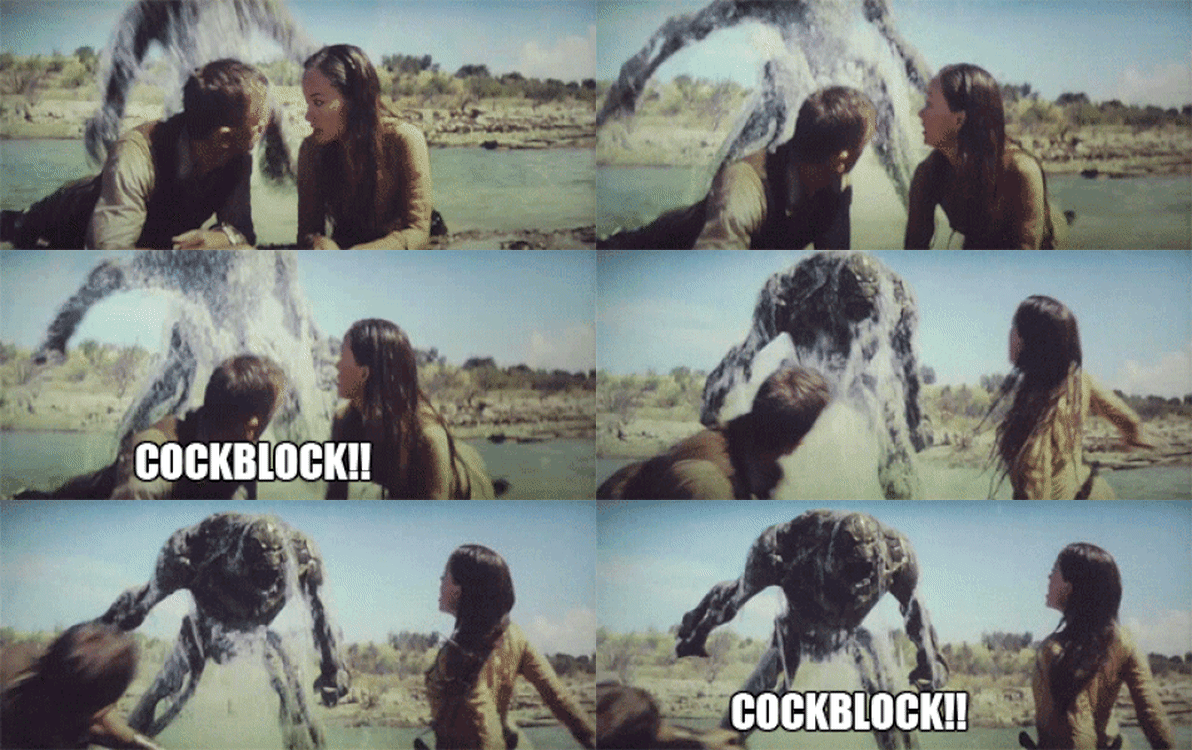
The movie was based upon the 2006 graphic novel by Scott Mitchell Rosenberg. It told the story of an alien invasion that occurred in the New Mexico Territory in 1873. The story focused upon a mysterious loner that awakens in the desert, injured and wearing a strange bracelet shackled to his wrist. He wanders into the town of Absolution, where the local preacher, Meacham treats his wound. After the stranger subdues Percy Dolarhyde, who has been terrorizing the populace, Sheriff Taggart recognizes the loner as Jake Lonergan, a wanted outlaw, and tries to arrest him. Jake nearly escapes, but a mysterious woman named Ella Swenson knocks him out. Percy's father, Colonel Woodrow Dolarhyde, a rich and influential cattleman, arrives with his men and demands that Percy be released to him. He also wants Jake, who had stolen Dolarhyde's gold. During the standoff, alien spaceships begin attacking the town. Percy, Sheriff Taggart and many townsfolk are abducted. Jake shoots down one ship with a device concealed in his wrist band, ending the attack. Realizing that the bracelet that Jake wears stands between them and the aliens, Colonel Dolarhyde, Meacham and Ella convinces Jake to help them find the aliens and the kidnapped townspeople, despite the fact that he has no memory of his own identity, let alone of any previous encounters with the aliens. Their expedition leads them Jake's former gang and a band of Chiricahua Apaches, who have also been victims of the aliens.

"COWBOYS & ALIENS" is not perfect. It has its flaws. To be honest, I can think of one or two flaws. Perhaps one. Although I understood that the aliens were taking the gold found near Absolution to power their starship, the script never made it clear on why they were taking the populace, as well. The only thing that the script made clear was that the kidnapped populace were being experimented upon. When it comes to human experimentation of reasons behind an invasions, many plots for alien invasion movies and television series tend to be rather weak in this area, including some of the best in this genre. And my other problem was that the script failed to reveal how Ella, who turned out to be another alien whose people had been destroyed by the invaders, ended up on Earth.

But despite these flaws, "COWBOYS & ALIENS" really impressed me. I thought that Jon Favreau did an excellent job in combining action with the film's dramatic moments. And his eye for location, greatly assisted by Matthew Libatique's photography of the New Mexican countryside, gave the movie's visuals a natural grandeur. In my review of "SUPER 8", I had commented that it reminded me of an old "STAR TREK VOYAGER" episode. I cannot say the same for "COWBOYS & ALIENS". But it did remind me of a "STAR TREK VOYAGER" fanfiction story called "Ashes to Ashes". At least Jake's experiences with the aliens before the movie began. And "COWBOYS & ALIENS" must be the only alien invasion movie I can think of that was set before the 20th century. It occurred to me that if the two most famous adaptations of H.G. Wells' novel, "War of the Worlds" had been given its original setting, this would not have been the case. Unless someone knows of another alien invasion movie with a pre-20th century setting. Ever since I first saw the trailers for "COWBOYS & ALIENS", I wondered how the screenwriters would combine the two genres of Science-Fiction and Westerns. Hell, I wondered if they could. Mixing Jake's history as an outlaw with his experiences with the aliens did the trick. At least I believe so. More importantly, "COWBOYS & ALIENS" provided plenty of opportunities for character development - and that includes the supporting cast.

The cast certainly proved to be first-rate. There have been British actors who have appeared in Westerns before. Come to think of it, Daniel Craig is not even the first James Bond actor who has appeared in a Western. But he is the only one I can recall who appeared in a Western as an American-born character. And if I must be blunt, the man takes to Westerns like a duck to water. More importantly, both Craig's super performance and the screenwriters made certain that his Jake Lonergran did not come off as some cliché of the "Man With No Name" character from Sergio Leone's DOLLAR TRILOGY". Craig made him a man determined to learn of his past, while dealing with the sketchy memories of a past love and his attraction toward Ella.

The character of Colonel Woodrow Dolarhyde seems like a far cry from Harrison Ford's usual roles. His Colonel Dolarhyde was not the solid Jack Ryan type or the rough, yet dashing Indiana Jones persona. In one of his rare, offbeat roles, Ford's Colonel Dolarhyde was a ruthless, no-nonsense man who ruled his ranch and the town of Absolution with an iron fist. And Ford did a first-rate job of diluting Dolarhyde's distasteful ruthlessness into something more . . . human and warm. I wondered how I would take Olivia Wilde's performance as the mysterious Ella Swenson, who seemed determined to get Jake to help the rest of Absolution's citizens find the aliens. After seeing the movie, I enjoyed her performance very much. She had a strong chemistry with Craig. More importantly, she gave a solid performance and possessed a strong screen presence. But I really enjoyed about Wilde's performance was that she conveyed an other world quality about Ella that strongly hinted her role as an alien who landed on Earth to find the invaders who had destroyed most of her race.

The supporting cast was led by the likes of Sam Rockwell, who competently portrayed Absolution's insecure saloon keeper, Doc; and Adam Beach, who gave a deliciously complex performance as Dolarhyde's right-hand man, Nat Colorado. And actors such as Paul Dano as Dolarhyde's s raucous son, a serene Clancy Brown, Noah Ringer (from "THE LAST AIRBENDER"), who portrayed the sheriff's grandson, and a solid Keith Carradine gave firm support.

I do not know what else I could say about "COWBOYS & ALIENS". I find it a pity that it had failed to become a hit. Because I really enjoyed it. The screenwriters, along with cinematographer Matthew Libatique, a first-rate cast led by Daniel Craig and Harrison Ford and fine direction by Jon Favreau made it one of my favorite films from the summer of 2011.


Tuesday, March 14, 2023

"LIONS FOR LAMBS" (2007) Photo Gallery


Below are images from "LIONS FOR LAMBS", the 2007 political drama directed by and starring Robert Redford. Tom Cruise and Meryl Streep co-starred.


"LIONS FOR LAMBS" (2007) Photo Gallery


Monday, March 6, 2023

"FLASHMAN" (1969) Book Review


"FLASHMAN" (1969) Book Review

Fifty-four years ago, an old literary character was re-introduced to many readers, thanks to a former Scottish journalist named George MacDonald Fraser. The author took a character from a famous Victorian novel and created a series of novels that placed said character in a series of historical events throughout the middle and second half of the 19th century.

The 1857 novel, ”TOM BROWN’S SCHOOLDAYS”, told the story of a young English boy named Tom Brown and his experiences at the famous school, Rugby, during the 1830s. One of Tom’s travails focused on his abuse at the hands of an older student – a bully – named Flashman. However, Flashman got drunk at a local tavern and in the following morning was expelled by Rugby’s famous headmaster, Dr. Thomas Arnold. Fraser took the Flashman character, gave him a first name – Harry – and continued his story following the expulsion from Rugby in the 1969 novel, "FLASHMAN".

The beginning of the novel saw the seventeen-year-old Harry Flashman trying to find a new profession following his expulsion from Rugby. Due to his father’s wealth and his maternal Uncle Bindley Paget’s social connections, Flashman found a position as a junior officer in one of Britain’s most elite Army regiments, the 11th Hussars aka the Cherrypickers. And thanks to his talent for toadying and projecting a sense of style (inherited from his aristocratic late mother), Flashman managed to win the support and favor of the regimental commander, the haughty James Thomas Brudenell, 7th Earl of Cardigan. Unfortunately, Flashman’s ideal life as a leisurely Army officer came to an end. His involvement with the French mistress of a fellow officer kicked off a series of events that led to Flashman being swept into the First Anglo-Afghan War (1839-1842). One of those events included seducing one Elspeth Morrison, the sixteen-year-old daughter of a wealthy Scottish merchant. After being forced to marry her by her relations, Flashman was kicked out of the 11th Hussars and sent to India by Lord Cardigan, who regarded the marriage as a step down the social ladder for the usually favored young Army officer.

It was in Afghanistan that Flashman earned the nickname, “Bloody Lance” by taking credit for his servant’s killing of four Afghan attackers. There, he also met one Ilderim Khan, the son of a pro-British Afghan nobleman and became the latter’s lifelong friend and blood brother. This friendship would end up saving Flashman’s life during the Sepoy Rebellion in ”FLASHMAN IN THE GREAT GAME”. Flashman also managed to earn two deadly enemies – an Afghan warlord named Gul Shah and his mistress (later wife), a dancer named Narreeman. The source of the pair’s enmity toward Flashman originated with his rape of Narreeman.

More importantly, ”FLASHMAN” allowed readers to view many important events of the First Anglo-Afghan War. Not only did Flashman meet many historical figures such as Lord Cardigan, Queen Victoria, Prince Albert, the Duke of Wellington, but also Alexander Burnes, Akbar Khan, William Macnaghten, Thomas Arnold, and the incompetent commander of the British Army in Afghanistan, General William Elphinstone.

I must admit that my opinion of the novel has changed a great deal over the years. Originally, I held a low opinion of ”FLASHMAN” for years, comparing it to the more epic-like sagas such as ”FLASHMAN AT THE CHARGE” (1973), ”FLASHMAN IN THE GREAT GAME” (1975), ”FLASHMAN AND THE REDSKINS” (1982) and ”FLASHMAN AND THE DRAGON” (1985). I still regard these four novels in a higher regard than ”FLASHMAN”. But I must admit that perhaps I had been a little unfair in my regard for the 1969 novel. It is actually a solid adventure story filled with historical interest, witty humor, sharp action and excellent pacing. Some fans of The Flashman Papers have expressed disgust or disenchantment with the Harry Flashman character portrayed in this novel. I suspect that a great deal of these negative opinions may have stemmed from Flashman’s rape of Narreeman. And I understand. However, many of these fans also complained about the young British officer’s crass style and manner – especially toward his father’s mistress, Judy. One has to remember that Harry Flashman aged from 17 to 20 years old in this story. He did convey some semblance of the style, common sense and instinct that would fool many people and serve him for years. But as an adolescent on the threshold of twenty, he had yet to learn some of the hard facts of life. As for his rough treatment and negative opinion of Judy, I suspect that his ego suffered a massive blow, when she rejected him, following a one-time bout under the sheets. A blow that he obviously had failed to recover from after six decades, while writing "his memoirs".

”FLASHMAN” also had its share of interesting fictional characters. I have already mentioned the villainous Gul Shah and his mistress (later wife) Narreeman. I have also mentioned the young Afghan who became a close friend of Flashy’s, Ilderim Khan. But he had an even larger role in ”FLASHMAN IN THE GREAT GAME”. And as I had mentioned, Elspeth also appeared in the novel. However, her presence in the novel would not be truly felt, until the last chapter that featured Harry’s homecoming. Fraser barely explored her personality in the novel, but he did allow a peek into her promiscuous and self-absorbed nature in that last chapter. One particular character, Sergeant Hudson, proved to be a reliable source of defense for Flashman during the retreat from Kabul. During this event, Flashman experienced one of the most bizarre moments of his life, while being rejected by the young wife of an Army officer named Mrs. Betty Parker, whom he was trying to seduce:

"'What the devil' says I. 'What’s the matter?'

'Oh, you brute!' she hissed - for she had the sense to keep her voice down – 'you filthy, beastly brute! Get out of my tent at once! At once, d’you her?'

I could make nothing of this and said so. 'What have I done? I was only being friendly. What are you acting so damned missish for?'

'Oh base!' says she. 'You . . . you . . .'

'Oh, come now,' says I. 'You’re in very high ropes, to be sure. You weren’t so proper when I squeezed you the other night.'

'Squeezed me?' says she, as though I had uttered some unmentionable word.

'Aye, squeezed. Like this.' And I reached over and, with a quick fumble in the dark, caught one of her breasts. To my amazement, she didn’t seem to mind.

'Oh, that!' she says. 'What an evil creature you are! You know that is nothing; all gentlemen do that, in affection. But you, you monstrous beast, presume on my friendship to try to . . . Oh, oh, I could die of shame!'

If I had not heard her, I shouldn’t have believed it. God knows I have learned enough since of the inadequacies of education given to young Englishwomen, but this was incredible."


This last encounter with Mrs. Betty Parker struck me as a hilarious metaphor for the blindingly naïve morality that had begun to encroach early Victorian society.

”FLASHMAN” also provided some interesting historical vignettes from the First Anglo-Afghan War. And young Flashman managed to witness or participate in a good number of them. The novel allowed him to be the sole surviving British witness to the murder of political officer, Sir Alexander Burnes and his younger brother, Charles. He also witnessed the murder of another political officer named Sir William Macnaghten, along with Last Stand at Gandamak and the Siege of Jalalabad. But Fraser’s pièce de résistance in ”FLASHMAN” proved to be the disasterous Kabul retreat in which the British contingent under General Elphinstone were forced to march from Afghanistan to India in cold weather and dire circumstances:

"From other accounts of that frightful march that I have read – mostly Mackenzie’s and Lawrence’s and Lady Sale’s – I can fit a few of my recollections into their chronicle, but in the main it is just a terrible, bloody nightmare even now, more than sixty years after. Ice and blood and groans and death and despair, and the shrieks of dying men and women and the howling of the Ghazis and Gilzais. They rushed and struck, and rushed and struck again, mostly at the camp-followers, until it seemed there was a slashed brown body every yard of the way. The only place of safety was in the heart of Shelton’s main body, where the sepoys still kept some sort of order; I suggested to Elphy when we set off that I and my lancers should ride guard on the womenfolk, and he agreed at once. It was a wise move on my part, for the attacks on the flanks were now so frequent that the work we had been doing yesterday was become fatally dangerous. Mackenzie’s jezzailchis were cut to ribbons stemming the sorties."

Reading the above passage made me wonder about the wisdom of the current Western presence in Afghanistan. And there is nothing like a British military disaster to bring out the best of Fraser’s writing skulls. It proved to be the first of such passages in novels like ”FLASHMAN IN THE GREAT GAME” and ”FLASHMAN AND THE REDSKINS”.

In the end, Fraser did a solid job in initiating what would prove to be The Flashman Papers in his first novel, ”FLASHMAN”. Granted, the novel’s first part set in England struck me as slightly rushed. And the Harry Flashman character seemed a bit crude in compared to his characterizations in the novels that followed. Like many other readers, I found his rape of the Narreeman character hard to stomach. But Fraser did an excellent job in re-creating early Victorian Britain, British India, Afghanistan and the First Anglo-Afghan War. In short, ”FLASHMAN” turned out to be a solid start to an excellent series of historical novels.


Friday, February 24, 2023

"SENSE AND SENSIBILITY" (1971) Review


"SENSE AND SENSIBILITY" (1971) Review

For some reason, I still find it hard to believe that until recently, very few people were aware that the first adaptation of Jane Austen's 1811 novel, "Sense and Sensibility", dated as far back as 1971. After all, people have been aware of other Austen adaptations during this same period or earlier. Even the Wikipedia site fails to mention it, except in connection with one of the cast members. What was about this four-part miniseries that eluded so many Austen fans?

In "SENSE AND SENSIBILITY", a wealthy landowner named Mr. Dashwood dies, leaving his two daughters and second wife at the mercy of his son by his first marriage, thanks to the rules of inheritance. When the son fails to financially help his sisters and stepmother, the trio are forced to live at a meager cottage, thanks to the generosity of Mrs. Dashwood's cousin. The miniseries follows the love lives of the sisters, while they deal with their new penniless status.

I could have went into greater detail about Elinor and Marianne Dashwood. But what would have been the point? Austen's novel and the other adaptations have made both their story and characters well known to fans. Everyone knows that the Dashwood sisters' penniless state have made them undesirable as potential mates among the English upper-class. And many know that Elinor Dashwood is the older and more sensible sister, who kept her emotions suppressed behind a facade of stoic behavior. They also know that Marianne is the younger sisters, whose romantic enthusiasm led to emotional excesses and irrational behavior. Was there something unique about this adaptation of Austen's novel? Hmmm. Other than it was probably the first version of the 1811 novel and the first of four versions to exclude the character of the youngest Dashwood sister, Margaret.

Overall, I believe that "SENSE AND SENSIBILITY" turned out to be an entertaining and well-paced television miniseries. But it was not perfect. One, I felt that screenwriter Denis Constanduros made a few missteps in his adaptation. I wish that Constanduros had included a scene featuring John Dashwood's last conversation with his dying father. I felt that his eventually betrayal of his promise, due to his wife's capriciousness would have possessed more bite. I also felt that Constanduros could have included more scenes featuring Marianne and John Willoughy's courtship. The period between their first meeting and Willoughby's decision to end their romance seemed to go by in a flash. It happened too soon for me to understand Marianne's grief over his rejection of her. Although there were a good deal of exterior shots of the English countryside, I wish there had been more exterior shots of early 19th century London, during the sisters' trip. The London sequences made the miniseries feel more like a filmed play. And why on earth did Constanduros allowed Elinor to pay a visit to Edward Ferrars' London rooms alone? What was he thinking? He should have allowed Elinor to summon Edward to Mrs. Jennings' home in order to deliver Colonel Brandon's news about a new job. I have one last major problem. Why on earth did costume designer had Elinor and Marianne wearing identical traveling outfits? They were not twin sisters. And no siblings from an upper-class family - especially of the female gender - would be caught dead in this manner:

vlcsnap-23153

What was costumer designer Charles Knode thinking?

I also had some problems with the casting and performances. I had a real problem with actress Ciaran Madden's performance as Marianne Dashwood. How can I put it? It was over-the-top. I realize that she was at least 25 years old at the time this production was filmed. But did she and director David Giles really thought an exaggerated performance was necessary to portray the emotional 17-year-old Marianne? Was that their idea of portraying an emotional adolescent? And why would actor Michael Alderidge use a strong, regional accent for his portrayal of Sir John Middleton? I realize that his mother-in-law and wife came from a middle-class background. But Sir John and his cousin Mrs. Dashwood, did not. Both actresses who portrayed the Steele sisters - Frances Cuka and Maggie Jones - seemed at least a decade-and-a-half too old for their roles. And Kay Gallie's Fanny Dashwood seemed like such a major disappointment. Her Fanny struck me as too passive-aggressive and nervous in compared to the other actresses who portrayed the role.

But despite some disappointments, I must admit that "SENSE AND SENSIBILITY" turned out to be a pretty good production. Hell, I like it a lot more than I do the 1981 television version. Thanks to Constanduros's script and Giles' direction, the four-part miniseries struck me as well paced - aside from Marianne and Willoughby's courtship. Aside from the traveling outfits, I must admit that I found Knode's costume designs both colorful and elegant. And like the 1995 movie, I was happy to see that the screenplay allowed Marianne to become aware of Colonel Brandon before her meeting with Willoughby . . . allowing the pair's eventual romance in the last episode very credible.

There were also some very good performances in "SENSE AND SENSIBILITY". I found myself surprisingly impressed by Richard Owens' performance as Colonel Brandon. At first, I barely paid attention to him. But I must admit that his performance actually grew on me and I thought he did a credible job of slowly revealing Brandon's passion for Marianne. Despite his strong regional accent, I must admit that Michael Aldridge was perfectly cast as Mrs. Dashwood's gregarious cousin, Sir John Middleton. And despite her age, Frances Cuka did a very good of conveying Lucy Steele's manipulations regarding Edward, Elinor and the Ferrars family . . . even if I found it a bit obvious. I was very impressed by Milton Johns' performance as Elinor and Marianne's spineless older half-brother John Dashwood. In fact, I feel that he gave one of the better performances in the miniseries. Robin Ellis gave a solid, yet charming performance as Edward Ferrars. However, I must admit that I was not that impressed by his screen chemistry with Joanna David's Elinor. In an ARTICLE I had written about Jane Austen's rogues, I had originally stated that I found Clive Francis' portrayal of the caddish John Willoughby unmemorable. I take it back. On a second viewing, I found myself surprisingly impressed by his performance. I think I may have been distracted by the so-called Regency wig he was wearing . . . or the speed of the Marianne-Willoughby courtship. But I thought Francis, who went on to co-star with Ellis in the "POLDARK" series a few years later, gave a very complex and satisfying performance.

But there were two performances in "SENSE AND SENSIBILITY" that I found outstanding. One of them belonged to Joanna David, who was perfect - well . . . almost - as Elinor Dashwood. She was one of the few performers who managed to restrain from "playing to the second balcony" as many other stage-trained actors tend to do. Mind you, there were moments when she seemed incapable of projecting Elinor's passionate nature behind the sensible facade. But more than any other person in the cast, she did a superb job in carrying the miniseries on her shoulders. The other outstanding performance turned out to be Patricia Rutledge's portrayal of the vivacious Mrs. Jennings, Sir John's mother-in-law. She was in her early 40s at the time and technically, too young for the role. But I cannot deny that Rutledge seemed like the very personification of the verbose and interfering, yet warm-hearted widow. Of the four Mrs. Jennings I have seen, only Elizabeth Spriggs from the 1995 movie seemed her equal.

"SENSE AND SENSIBILITY" is not the best adaptation of Jane Austen's 1811 novel, despite being the first. And it possessed certain aspects in both the script and casting that I found questionable. But thanks to David Giles' direction, Denis Constanduros' screenplay, and superb performances especially from Joanna David and Patricia Rutledge; I feel that it turned out to be a pretty damn good adaptation in the end. I would highly recommend it.

Wednesday, February 8, 2023

"GOLDFINGER" (1964) Photo Gallery

 goldfinger_1964_08_1800x1200


Below are images from "GOLDFINGER", the 1964 adaptation of Ian Fleming's 1959 James Bond novel. Directed by Guy Hamilton, the movie starred Sean Connery as James Bond:


"GOLDFINGER" (1964) Photo Gallery

618w_james_bond_in_pictures_2


1964 Goldfinger 02


1964-goldfinger-30-bond-vs-oddjob


Bond_1964_Goldfinger_3


e4f1d192067e93c5511cdd60d0f01c0d


gf_Goldfinger_1964_frame_20090912005754


GF-Harold-Sakata


goldfinger


GOLDFINGER6


goldfinger-1964-_144627-fli_1379323829


Goldfinger-1964-5


kinopoisk_ru-Goldfinger-921171


kinopoisk_ru-Goldfinger-921209


kinopoisk_ru-Goldfinger-1254314


kinopoisk_ru-Goldfinger-1254317


kinopoisk_ru-Goldfinger-1254318


kinopoisk_ru-Goldfinger-1254319


kinopoisk_ru-Goldfinger-1254328


kinopoisk_ru-Goldfinger-1254329


kinopoisk_ru-Goldfinger-1473097


kinopoisk_ru-Goldfinger-1473099


kinopoisk_ru-Goldfinger-1473104


kinopoisk_ru-Goldfinger-2019316


pussygalore

Sunday, February 5, 2023

"LOST" RETROSPECT (1.14) "Special"


"LOST" RETROSPECT: (1.14) "Special"

I just watched the Season One episode of "LOST" called (1.14) "Special". It reminded me of how the show runners had pretty much screwed over the Michael Dawson character.

Although I do not regard "Special" as one of the series' best episodes, let alone one of the best about Michael, watching it reminded me of the anger had I felt the show’s fans and their expectations and assumptions about him. One of the criticisms directed at Michael was his inability to be the perfect parent. Some critics actually claimed that Michael did not know how to be a parent. It occurred to me that it was a stupid comment to make. Worse, this comment was indicative of the fans' unrealistic expectations of Michael’s character.

Of course, Michael had no idea on how to be a parent. He was new at it, thanks to his ex-girlfriend, Susan Lloyd. Not only did she break up with Michael following Walt’s birth. She also decided that Michael would not play a role in Walt’s life as his father. Even before her death, she had expected her husband and Walt’s stepfather, Brian Porter, to be the one to raise him. One of the more frustrating aspects of the "LOST" fandom toward Michael is that many had expected him to be this one-dimensional character. He either had to be another castaway, loyal to the series’ leading characters; the perfect parent, despite having very little experience prior to being stranded on the island; or turn to the "Great White Hunter" aka John Locke for lessons on parenthood.

And what the fuck was up with John Locke? Teaching Walt how to use a machete … without Michael's permission? What the hell was he thinking, allowing a child to handle a dangerous weapon? And then there was that piece of advice he gave Michael - to treat Walt more like an adult than a child. What the fuck? Walt was ten years old, not fucking twenty-four years old. One, parents tend regard their off-springs as children even after they become adults. To a certain extent. And two, Walt was too young and too immature to be treated like an adult at the time.

What I found disturbing about this situation regarding the machete lesson is that when Michael had called Locke out for teaching Walt how to use a machete, the latter turned it on Michael and blamed him for not being the perfect father. This was bullshit. Teaching a ten year-old boy how to handle a machete without the permission of the latter's father? Treating said ten-year-old child like an adult? If Michael was expected to become a better parent because he had followed Locke’s advice, then "Special" gave the wrong kind of lesson in parenthood. And if I must be brutally honest, so did screenwriter David Fury. In the end, Walt’s encounter with a polar bear pretty much justified Locke’s decision to teach him to use a machete. It seemed as if Fury and the series’ show runners - Carlton Cuse and Damon Lindelof - believed Locke knew more about raising a child than Michael.

John Locke was not Dr. Spock. He was a man who had the wrong idea on what it really took to become a parent, based on his own damaged relationships with his parents. As for Michael, he was never a perfect parent. But he was never terrible. And despite his flaws, a great deal of his actions were dictated by his desire to protect Walt from the island’s dangers. His lack of perfection was not surprising since a "perfect parent" does not exist. Never really existed in the first place.

Human beings are not perfect. If humans are not perfect, why expect someone - whether in real life or in fiction - to be the perfect parent? Or perhaps many "LOST" fans had harbored such high demands from Michael because he was a black man and not the lead of a television show. Perhaps he was not expected to be as ambiguous and complicated as he proved to be.


"GREAT EXPECTATIONS" (1946) Review

  "GREAT EXPECTATIONS" (1946) Review If there is one adaptation of a Charles Dickens' novel that has received a high number of...