
"DIE HARD" (1988) Review
Almost thirty-six years ago, 20th Century Fox released an action-adventure film that kicked off a movie franchise that has lasted with the addition of four other films and twenty-five years. I am speaking of the 1988 movie called "DIE HARD". And the ironic thing is that I had no intention of seeing the film when it first hit the movie theaters during that summer of '88.
Based on Roderick Thorp's 1979 novel called "Nothing Lasts Forever" (which sounds like a title for a Bond movie), "DIE HARD" was directed by John McTiernan. Many would be surprised to know that the 1979 movie was a sequel to an earlier Thorp novel published in 1966 called "The Detective", which was adapted into a 1968 movie that starred Frank Sinatra. Thorp had hoped a movie adaptation of the 1979 novel would also star Sinatra. But the singer-actor was not interested in a sequel to his movie. Later, the novel was being considered as a sequel to the Arnold Schwartzenegger 1985 movie, "COMMANDO". But Schartzenegger was not interested. Oh dear. Finally, the novel became a literary source for "DIE HARD". However, the Fox studio executives were not thrilled at the idea of Bruce Willis being cast as the movie's lead, due to his reputation as a comedic television actor. But cast he was . . . and the rest is Hollywood history.
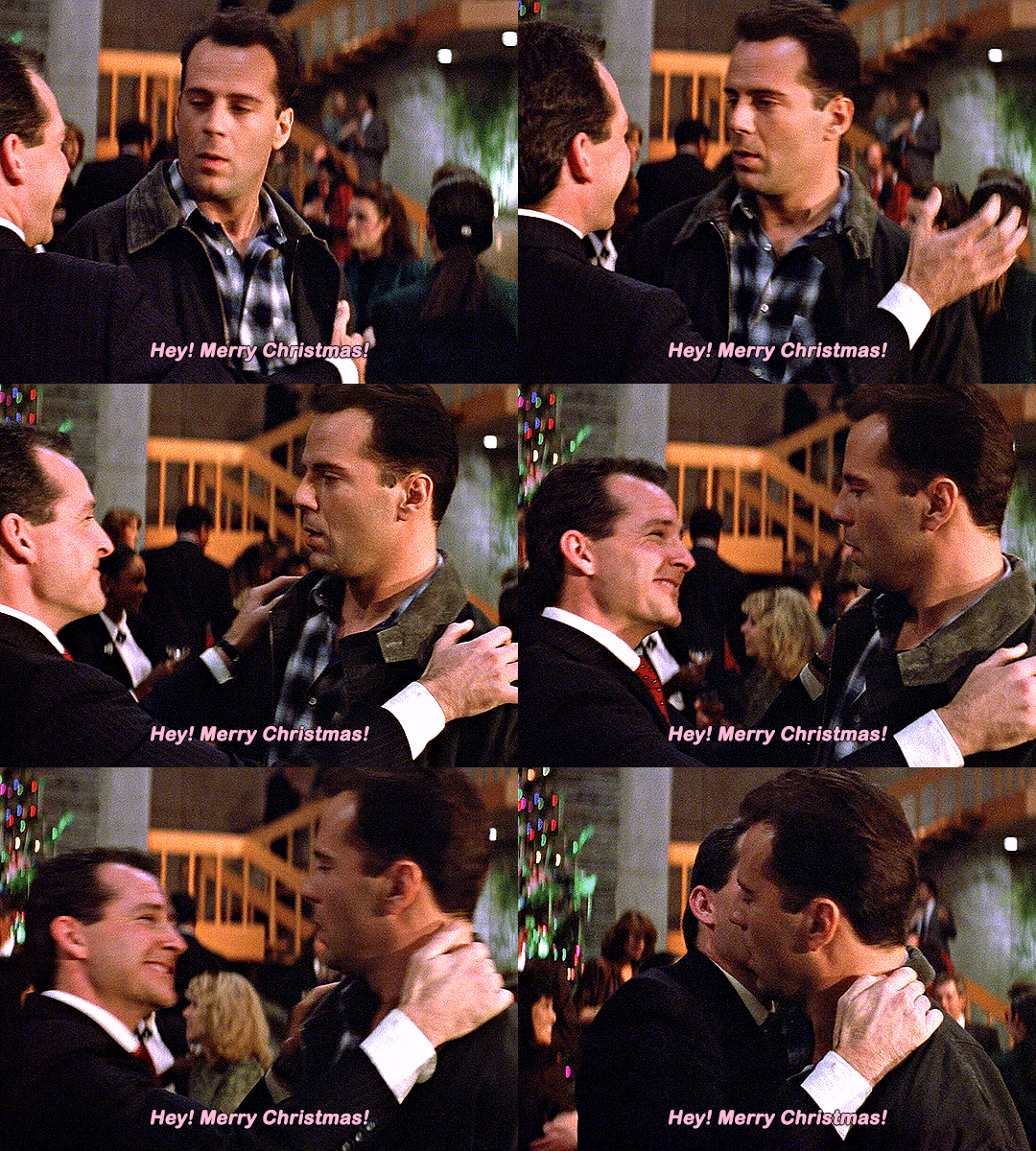
"DIE HARD" told the story of off-duty NYPD detective John McClane, who arrived in Los Angeles to reconcile with his estranged wife, Holly Gennero McClane. Husband and wife had clashed several months earlier when she accepted a job promotion with the Nakatomi Corporation that sent her to Los Angeles. A hired limousine driver named Argyle drives McClane to the Nakatomi Plaza building in Century City for the company's Christmas party. While, the detective changes clothes, the party is disrupted by the arrival of terrorist Hans Gruber and his armed followers. The latter seize control of the tower and the partygoers as hostages. Only McClane, armed with a pistol, manages to evade capture. Gruber's intentions are revealed, when he interrogates Nakatomi executive Joseph Takagi for the code to the building's vault that holds $640 million in bearer bonds. When Takagi refuses to cooperate, Gruber executes him. McClane manages to kill one of Gruber's men, taking the latter's weapon and radio. He uses the radio to contact the Los Angeles Police Department during a gunfight with more of Gruber's men on the roof. The L.A.P.D. eventually sends patrolman Sergeant Al Powell to investigate. When McClane drops one of Gruber's dead associates on Powell's patrol car roof, the latter finally summons the police force to respond. The incident also draws the attention of an ambitious local news reporter named Richard Thornburg, who is determined to learn McClane's identity. Despite the arrival of Deputy Chief Dwayne Robinson, numerous men that include a S.W.A.T. team, and later the F.B.I., McClane and Holly eventually realizes that matters have grown worse for both of them.
Most moviegoers and critics view "DIE HARD" as the best in the franchise. Is it the best? Hmmm . . . I really cannot say. As much as I love the movie, I certainly do not consider it perfect. The movie possesses flaws that I had not noticed during previous viewings and one particular flaw that I have noticed since I first saw it years ago. One aspect about "DIE HARD" that I found particularly annoying was the movie's pacing. Director John McTiernan did a pretty good job with the movie's pacing. Unfortunately, two-thirds into the movie, McTiernan began to lose steam and the pacing began to drag. Trimming the story would not have helped. I had no problem with the narrative during this film's period. But I did have a problem with the director's pacing. One of Roger Ebert's complaints about "DIE HARD" was its unflattering portrayal of the Los Angeles Police Department. And if I must be brutally honest, I share his complaint. I am not a great admirer of the L.A.P.D. or any police force. But the police's incompetency portrayed in the movie struck me as damn near unrealistic. I feel that McTiernan and screenwriters Steven E. de Souza and Jeb Stuart went a bit to the extreme to make John McClane look good. And if I must be brutally frank, the movie does feature some rather cheesy dialogue - especially from the villains. However, my biggest complaint regarding "DIE HARD" - the one flaw I have been aware of since I first saw the film - occurred in the final action scene. Back in the 1980s, it was popular in action or thriller movies to temporarily "resurrect" a villain/villainess before killing him or her for good. This happened with Glenn Close's character in the 1987 movie, "FATAL ATTRACTION". This also happened with Alexander Godunov's character in "DIE HARD". And you know what? I hate this kind of showy action. I found it stupid and cringe-worthy when I first saw the movie. And I still find it a major blot on this otherwise first-rate movie.
Flaws or no flaws, "DIE HARD" is without a doubt, a first-rate action thriller that helped defined the genre during the 1980s. While reading the plot for Roderick Thorp's 1978 novel, I was surprised to discover how much it resembled the 1988 film. There were some changes made in the latter. The main hero acquired a new name and shed at least two decades in age. Instead of a daughter, McClane's wife ended up as one of the hostages. The franchise's producers used the daughter character in the fourth film, "LIVE FREE OR DIE HARD". The German terrorist - renamed Hans Gruber - was more interested in pulling a heist than making a political statement. The Al Powell character is at least fifteen years older. And unlike Thorp's novel, "DIE HARD" ended on a more optimistic note for the two main characters.
Producers Lawrence Gordon and Joel Silver were lucky to gather such a talented cast and director for this movie. Thanks to the actors and director John McTiernan, "DIE HARD" featured some excellent dramatic moments. My favorite dramatic scenes include the tense quarrel between John and Holly before Gruber's arrival at the Christmas party, Gruber's interrogation of Joseph Takagi for the codes to the executive vault, Holly's tense interactions with Gruber, Takagi employee Harry Ellis' attempt to convince McClane to surrender to Gruber, McClane's accidental encounter with Gruber, and the many radio conversations between McClane and Powell. I found the latter especially impressive, considering that Bruce Willis and Reginald VelJohnson spent most of the movie apart.
But "DIE HARD" is, above all, an action film. And thanks to some members of the cast, a group of talented stuntmen and crew, the action sequences featured in the movie proved to be very memorable. If I had to choose those scenes that really impressed me, they would have to be the ones that featured Al Powell's awareness of the presence of terrorists at the Nakatomi Tower thanks to some gunfire and a dead body that landed on his patrol car, the S.W.A.T. team's failed assault on the building, and McClane's retaliation against the terrorists' massacre of the S.W.A.T. team (using explosives strapped to a chair). I was also impressed by the brief, yet final confrontation between the McClanes and Gruber. But for me, the most spectacular sequence turned out to be the rooftop explosion that claimed the lives of more Gruber men and two F.B.I. agents hovering above in an helicopter. Well-known cinematographer Jan de Bont and the special effects team really outdid themselves in that particular sequence.
As I had earlier pointed out, "DIE HARD" featured some outstanding performances. Bruce Willis was already a television star thanks to the 1980s series, "MOONLIGHTING". But his superb, yet tough performance as the besieged N.Y.P.D. detective John McClane not only made him an action star, but also a bona fide movie star. I believe that Holly Gennero McClane proved to be one of Bonnie Bedelia's best roles, thanks to her excellent performance as McClane's passionate and no-nonsense wife. "DIE HARD" also made a star of Alan Rickman, thanks to his deliciously sardonic performance as the ruthless Hans Gruber. In fact, his Gruber happens to be one of my favorite cinematic villains of all time. Reginald VelJohnson's career also benefited from his first-rate performance as the compassionate L.A.P.D. officer, Sergeant Al Powell.
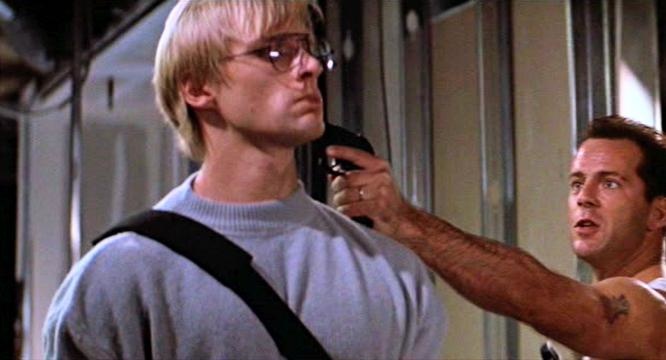
There were other performances in "DIE HARD" that caught my attention. Ballet dancer Alexander Godunov gave a very competent performance as Gruber's right-hand man, Hans, who wants revenge for McClane's killing of his younger brother. Hart Bochner was very entertaining as Holly's gauche co-worker, Harry Ellis. However, I must admit that I found the character somewhat one-dimensional. William Atherton was very memorable as the ambitious and slimy news reporter, Richard Thornburg. Clarence Gilyard revealed a talent for comic acting, in his excellent portrayal of Gruber's sardonic and cold-blooded computer specialist, Theo. Andreas Wisniewski was excellent as Hans' younger brother, the no-nonsense Karl. Robert Davi and Grand L. Bush (who reunited in the 1989 James Bond movie, "LICENSE TO KILL") made a great screen team as the arrogant F.B.I. Special Agents Johnson and Johnson. De'voreaux White, someone I have not seen in years, provided his own brand of sharp humor and the movie's best line as McClane's limousine driver, Argyle. And finally, the late Paul Gleason proved to be very entertaining as the not-so-bright Deputy Police Chief Dwayne Robinson.
I find myself back at that moment in which I pondered over the reputation of "DIE HARD". Do I still believe it is one of the best action movies ever made? Perhaps. Perhaps not. I have seen my share of action movies that strike me as equally good - including other films in the DIE HARD franchise. And the movie does have its share of flaws. But "DIE HARD" is also a personal favorite of mine, thanks to John McTiernan's excellent direction, a first-rate adaptation of Roderick Thorp's novel, superb action-sequences and outstanding performances from a stellar cast led by Bruce Willis. Over twenty-five years have passed since the movie's initial release. And honestly . . . it has not lost one bit of its magic.
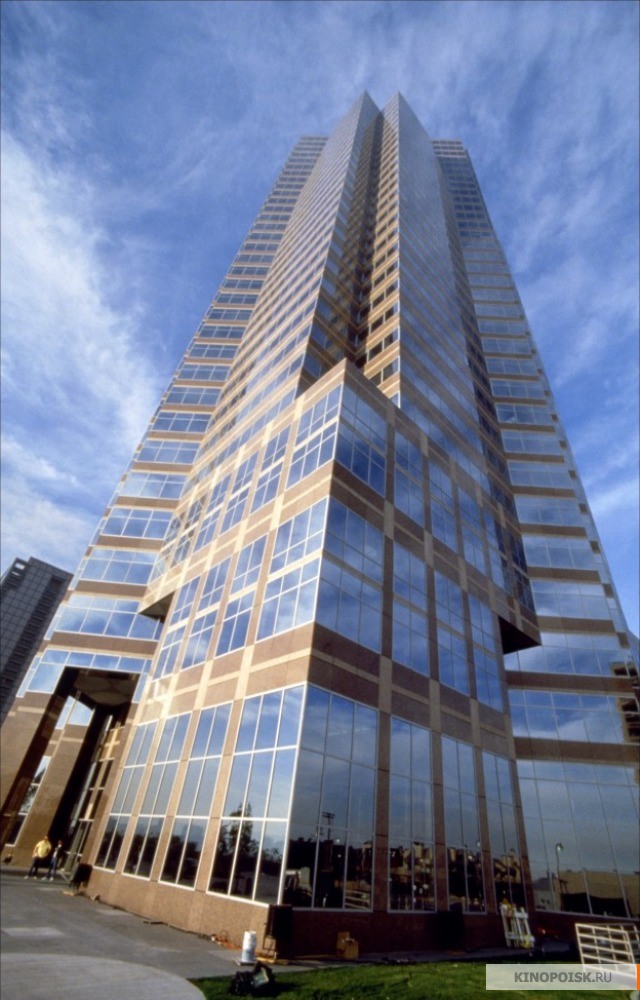
Fox Plaza Tower aka the Nakatomi Tower in Century City, CA






.jpg)


.jpg)


