Thursday, December 14, 2023

TIME MACHINE: John Brown's Christmas Raid Into Missouri


TIME MACHINE: JOHN BROWN'S CHRISTMAS RAID INTO MISSOURI

When people think of 19th century abolitionist John Brown, they would usually bring up his activities against pro-slavery factions in the Kansas Territory in the mid-1850s, especially the lethal attack he had led against five pro-slavery settlers near Pottawatomie Creek in May 1856. Or they would especially bring up the famous raid on the Federal armory at Harpers Ferry, Virginia (West Virginia), with the intent to start a slave liberation campaign. However, toward the end of the 1850s, Brown became known for another raid that led him from Missouri to the Canadian border.

On December 19, 1858; a biracial Missouri slave named Jim Daniels had encountered one George Gill, a free black man who happened to be one of Brown's lieutenants near the Missouri-Kansas border. Daniels complained to Gill that his owner Harvey Hicklan planned to sell his wife and children, along with another slave. This sale threatened to break up his family. Gill informed Brown, who saw Daniels' situation as an opportunity for a raid to liberate slaves and strike a blow for abolitionism. Earlier, he had conveyed his plans for an anti-slavery raid into the South, via the Appalachian Mountains to his Northern-born abolitionist supporters. But they had dismissed the idea as unrealistic and advised Brown to return to Kansas and lie low. However, Brown saw Daniels' plea to help prevent his family from being sold as an opportunity. He believed this raid and the 1,100 mile exodus to Canada would provide a good deal of press attention for his cause.

Brown's previous activities, especially the Pottawatomie Creek killings had made him persona non grata with many Americans - including a good number of abolitionists - by late 1858. Many Southerners wanted him captured or dead. His return to Missouri soil had infuriated many citizens of that state. By December 20, Brown had managed to gather twenty (20) riders to lead this latest raid into Western Missouri. He split his followers into three groups in order to free neighboring blacks on the same trip. Brown's group held up Harvey Hicklan at gunpoint, extracted Jim Daniels and the latter's family and took some of Hicklan's possessions to support the freed slaves. Brown sent a second group to John Larue's nearby farm t liberate four slaves and kidnap Larue as a hostage. A third group, led by Aaron Stevens (another Brown lieutenant), surprised David Cruise at his farmhouse and liberated a female slave. Believing that Cruise was reaching for a weapon, Stevens shot him dead.

Cruise's death transformed the raid from a rescue into an act that infuriated Kansans, Missourians and Southerners. The act, the slave escapes and Larue's kidnapping led to a great deal of negative press by the newspapers in those regions. Missouri's governor, Robert Marcellus Stewart, offered a reward of $3,000 for Brown's capture. Because of the publicity, Brown's efforts to lead the fugitive slaves and his men through Kansas and up north became increasingly difficult. Brown and his men were forced to keep the fugitives hidden inside the homes of anti-slavery supporters in the area near Osawatomie, Kansas for a month. One of the fugitives, a woman who happened to be pregnant around the time of her rescue, gave birth to a baby boy, who was named after Brown. However, the abolitionist, his men and the fugitives realized that none of them were safe, especially after nearly being spotted by pro-slavers on two separate occasions. On January 20, 1859; Brown, his men and fugitives resumed their journey north by heading for the Kansas-Nebraska Territory border.

Despite the negative press that covered Brown's journey; Brown, his men and the fugitives continued to receive aid from local anti-slavery supporters. On the night of January 24, 1859; Brown, Gill, eleven fugitives and the newborn baby had arrived at the farm of Major James Abbott near Lawrence, Kansas. Abbott provided them with food, clothing and fresh horses before they resumed their journey. Brown and his companions were nearly captured, following their arrival in Topeka, during a severe snowstorm. They were forced to spend the night at a nearby village called Holton. The following day, the party - including the remaining raiders - reached Spring Creek. Unfortunately, the water was too high for crossing by wagon or horseback. Brown was nearly in a state of panic, for he had learned both a local posse and one sent by Missouri's governor were waiting for them. Brown and his party managed to slip away to Fuller's Crossing . . . where a large posse of around one hundred men awaited them.

Brown remained calm and led his party across the raging creek. Following the crossing, the raiders and the fugitive slaves became engaged in a gun battle with eighty members of the posse. In a bold move, Brown and his party charged the posse members and drove the latter out of the area. The posse members were so intent upon retreating that two men rode some of their horses, digging their boot spurs into the animals. Ironically, there were no fatalities during the incident. Not only was it reported by the press, but also dubbed in newspapers as "the Battle of the Spurs".

After traveling through the eastern half of the Nebraska Territory, Brown and his party reached the free state of Iowa. Brown had used the state as a hideout during his anti-slavery activities in 1855 and 1856. Although they were allowed shelter in some of the Iowans' homes, they were not allowed to remain longer than one night, due to David Cruise's death. However, Brown and his party received friendlier receptions in communities like Des Moines, Grinnell and Springdale. Brown and fellow raider John Henry Kagi were nearly captured when they made an overnight visit to Iowa City. On March 9, Springdale's citizens accompanied Brown's party to West Liberty, where the latter boarded a railroad box car to Chicago, Illinois. They arrived in the latter city on March 11, at 3:30 a.m.

The party remained at the home of private detective and future Secret Service leader and Presidential bodyguard, Allan Pinkerton. The detective hid them at his home and at two other houses for several days, as he tried to raise funds for the raiders. Ironically, Pinkerton managed to raise a good deal of cash from fellow members of the Chicago Judiciary Convention, when he blurted out John Brown's presence in the city.

After raising $600 dollars, Pinkerton and his son conveyed Brown, the fugitives and the raiders to the Chicago railroad station. They boarded a boxcar for Detroit, Michigan. Upon their arrival in Detroit, the fugitive slaves and most of the raiders boarded a ferry that conveyed them across the Detroit River into Canada and freedom. Only Brown remained in the United States. After bidding them farewell, he headed for Oberlin, Ohio in order to visit the imprisoned rescuers involved in the Oberlin-Wellington Rescue.

The Christmas 1858 Raid of 1858 led to a 1,100 mile journey from Missouri, through Kansas Territory, Nebraska Territory, Iowa, Illinois, Michigan and finally Canada. The raid provided a great deal of national press coverage for John Brown. President James Buchanan offered a reward of $250 for Brown's capture. Missouri Governor Robert Marcellus Stewart continued to offer a reward of $3,000. The raid convinced Brown's Northern abolition supporters that his plan for a raid into the South via the Appalachian Mountains in order to lead the slaves into a major rebellion might work. Seven months later, John Brown led his famous raid at Harper's Ferry, Virginia.


Saturday, December 9, 2023

"SAFE HOUSE" (2012) Review


"SAFE HOUSE" (2012) Review

One of the first hits of the year 2012 turned out to be a neat little political thriller directed by Daniel Espinosa, titled "SAFE HOUSE" that was directed by Daniel Espinosa.

Penned by David Guggenheim, "SAFE HOUSE" is about a young and ambitious C.I.A. agent named Matt Weston, whose present assignment is the "housekeeper" of an Agency safe house in Cape Town, South Africa. When ex-C.I.A. agent-turned-international criminal Tobin Frost turns himself in to a nearby U.S. consulate, Weston is informed by his superiors at Langley that Tobin will be brought to the safe house by an Agency torturer named Daniel Kiefer and his men. Weston watches the torture, until the process is interrupted by mercenaries led by a man named Vargas. He has been after Frost for some information that the latter acquired from an MI-6. Kiefer and the other C.I.A. agents are killed by Vargas and his men. And Weston escapes the safe house with Frost as his captive.

As I had stated earlier, "SAFE HOUSE" is a neat little political thriller filled with exciting chase sequences and nail-biting fight scenes. All of this was filmed in and around Cape Town, Africa; which struck me as a refreshingly original setting for a spy thriller. More importantly, screenwriter Guggenheim allowed all of the action to revolve around the computer file that the Tobin Frost character had acquired. The file contained information on the illegal activities of various intelligence officials throughout the world - including those from the C.I.A. The Vargas character had been recruited to get his hands on the file and kill Frost in the process. Due to this subplot, Guggenheim managed to introduce the element of a "mole" within the C.I.A. And the mole in question might either be Weston's mentor, David Barlow, or the latter's colleague, Catherine Linklater.

I cannot deny that "SAFE HOUSE" is an entertaining thriller and I could easily see why it did so well at the box office. It possessed a tight plot concerning betrayal. The movie also questioned Weston's determination to maintain his C.I.A. career by allowing Frost to recount his own intelligence career and the circumstances that led him to turn rogue. However . . . it was not a perfect movie. It has its share of flaws that will never allow it to be considered one of the best spy thrillers to come out of Hollywood.

I have complained in past reviews about the new style of cinematography and editing that has prevailed in action-adventures since the BOURNE movies directed by Paul Greengrass. Yep . . . the same type of cinematography, direction and pacing is also prevalent in "SAFE HOUSE", thanks to director Daniel Espinoza, cinematographer Oliver Wood and editor Rick Pearson. Oh well. I suppose one has to endure some unpleasant aspects for the sake of a decent story. Speaking of the story . . . well, how can I say this? I enjoyed it. But I must admit that I found it rather predictable. It did not take me very long to figure out the "mole" who had sent Vargas to kill Frost. And I managed to figure out Weston and Frost's fates at least a half hour before the movie ended.

Thankfully, "SAFE HOUSE" provided plenty of first-rate performances that allowed me to . . . somewhat overlook the movie's flaws. Some of my favorite Denzel Washington roles have always been those that reeked of moral ambiguity. And Tobin Frost proved to be one of his most ambiguous roles to date. I must admit that I was a bit surprised by his character's goal by the film's last twenty minutes. I had assumed that his position as a rogue agent was a means to bring justice to the "mole" within the C.I.A. or in protest of some operation that threatened innocents. I was wrong. His actions had been purely motivated by greed. Yet, I could not help cheering him on, as he managed to evade his pursuers throughout the movie. Ryan Reynolds portrayed a less ambiguous role - namely the inexperienced C.I.A. agent Matt Weston, who has ambitions to rise within the Agency. Reynolds was in his mid-30s when this film was shot a decade ago. Yet, he did a first-rate job in capturing the naivety and ambitions of someone who could be at least a half-decade younger. This allowed Reynolds convey Weston's gradual maturity with great skill. By the end of the movie, his Weston almost seemed like a completely different from the young man at the beginning of the film.

"SAFE HOUSE" also boasted some solid performances from Sam Shephard, who portrayed the garrulous C.I.A. Director Harlan Whitford; Vera Farmiga as C.I.A. operative Catherine Linklater, who seems determined to believe that Weston is a fellow conspirator of Frost's; Liam Cunningham as the MI-6 agent who provided Frost with the files; RubĂ©n Blades as a former contact of Frost's, whose help he seeks in a local Cape Town township; Robert Patrick, who gave his character - C.I.A. torturer Daniel Kiefer - a sharp air of professionalism; and Nora Arnezeder, as Whitford's French girlfriend, who left confused by his sudden determination to distance himself from her. My favorite supporting performance came from Brendan Gleeson, whose portrayal of Weston's mentor, David Barlow, seemed to rival Washington's when in regard to moral ambiguity. Gleeson injected enough mystery into the character to make a viewer wonder if he is the mole or not. At the same, it is quite apparent that he cares about Weston's career and safety.

"SAFE HOUSE" may not be the best spy thriller to come along in quite a while. I found the plot rather predictable and I was not that impressed by the Greengrass-style photography and editing. But I cannot deny that Daniel Espinoza directed an entertaining thriller, thanks to a solid script written by David Guggenheim and an excellent cast led by Denzel Washington and Ryan Reynolds.


Friday, December 1, 2023

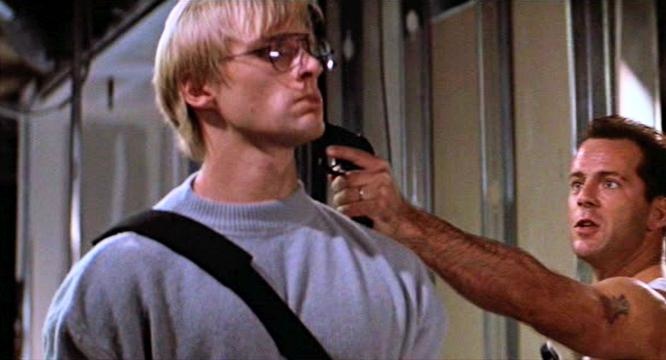
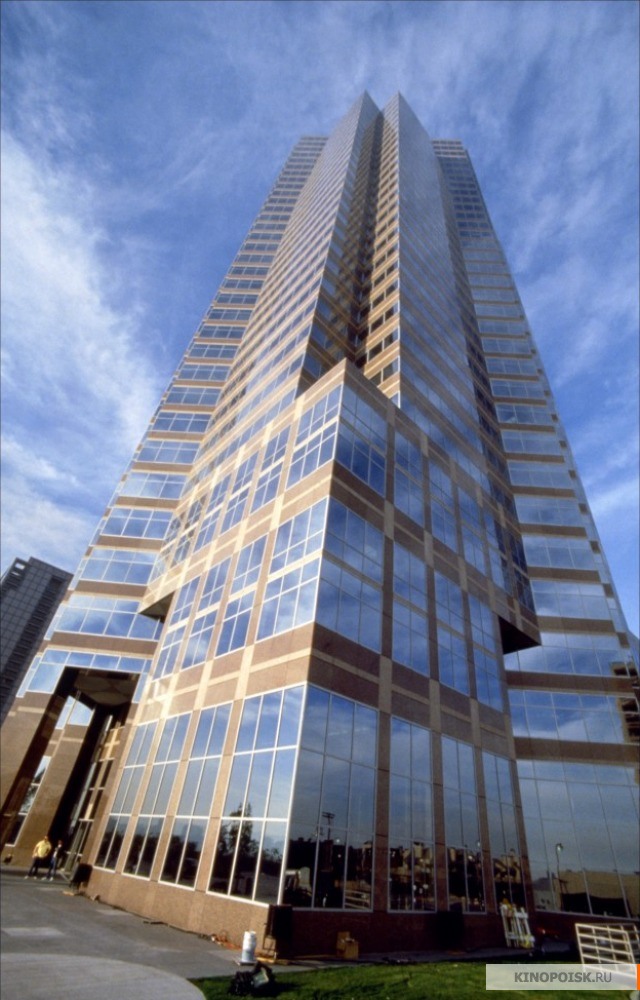
"DIE HARD" (1988) Photo Gallery


Below are images from the 1988 action film, "DIE HARD". Based on Roderick Thorp's 1979 novel, "Nothing Lasts Forever", and directed by John McTiernan, the movie starred Bruce Willis, Bonnie Bedelia, Reginald Vel Johnson and Alan Rickman:


"DIE HARD" (1988) Photo Gallery


Sunday, November 26, 2023

Top Ten Favorite THANKSGIVING Television Episodes


Below is a list of my favorite television episodes about the Thanksgiving holiday:


TOP TEN FAVORITE THANKSGIVING TELEVISION EPISODES

1 - Buffy the Vampire Slayer - Pangs

1. "Buffy the Vampire Slayer" - (4.08) "Pangs" - Vampire slayer Buffy Summers deal with a Native American vengeance spirit, the sudden appearance of her nemesis Spike and the preparation of a large holiday meal on Thanksgiving in this hilarious episode.


2 - Friends - The One Where Ross Got High

2. "Friends" - (6.09) "The One Where Ross Got High" - Live-in lovers Monica Geller and Chandler Bing invite her parents for their first Thanksgiving holiday and are shocked to discover that the latter does not like Chandler for reasons that have to do with Monica's brother Ross.


3 - WKRP in Cinncinati - Turkeys Away

3. "WKRP in Cinncinati" - (1.07) "Turkeys Away" - In this classic episode of the 1970s/80s sitcom, radio station owner Arthur Carlson takes a more hands-on managerial approach by organizing the greatest Thanksgiving promotion in radio history by dropping live turkeys from a helicopter. Hilarious performance by Richard Sanders.


4 - Friends - The One With All the Thanksgiving

4. "Friends" - (5.08) "The One with All the Thanksgivings" - In this funny episode, the six friends recount their worst Thanksgivings.


5 - Mad Men - The Wheel

5. "Mad Men" - (1.13) "The Wheel" - The marriage of Don and Betty Draper reach a new level following Betty's evaluation of their marriage during the Thanksgiving holiday. And secretary Peggy Olson experiences a professional high and a personal crisis.


6 - Friends - The One With All the Football

6. "Friends" - (3.09) "The One With the Football" - Emotions run high on Thanksgiving when the gang have a game of touch football initiated by Monica and Ross' sibling rivalry, while Chandler and Joey compete over a Dutch model.


8 - How I Met Your Mother - Slapsgiving

7. "How I Met Your Mother" - (3.09) "Slapsgiving" - Marshall Eriksen and Lily Aldrin host their first Thanksgiving dinner as a married couple. Ted Mosby and Robin Scherbatsky are still dealing with the breakup of their relationship and Marshall terrorizes Barney Stinson with the threat of a third slap he is due, thanks to an old bet.


9 - The West Wing - Shibboleth

8. "The West Wing" - (3.08) "Shibboleth" - The Thanksgiving holiday draws a group of Chinese Christians claiming religious persecution to the White House. Also Chief of Staff Le McGarry is at loggerheads with his sister over the issue of school prayer.


10 - Seinfeld - The Mom and Pop Store

9. "Seinfeld" - (6.08) "The Mom and Pop Store" - In this classic episode, George Constanza decides to buy a convertible once owned by "Jon Voight"; Cosmo Kramer tries to save a small shoe-repair business, much to Jerry Steinfeld's detriment; and Elaine Benes wins tickets for her boss to participate in the Macy's Thanksgiving Day Parade.


10 - Will and Grace - Queens For a Day

10. "Will and Grace" - (7.10-7.11) "Queens For a Day" - Lovers Will Truman and Vince D'Angelo decide to allow their "families" meet for the Thanksgiving holiday at the D'Angelo home with disastrous results.

Ranking of "AHSOKA" (2023) Episodes

 Ranking of "AHSOKA" (2023) Episodes


"Part Five: Shadow Warrior" (1.05)


"Part Eight: The Jedi, the Witch, and the Warlord" (1.08)


"Part Two: Toil and Trouble" (1.02)


"Part Seven: Dreams and Madness" (1.07)


"Part Four: Fallen Jedi" (1.04)


"Part One: Master and Apprentice" (1.01)


"Part Six: Far, Far Away" (1.06)


"Part Three: Time to Fly" (1.03)


<lj-cut>


<img src="https://ic.pics.livejournal.com/seldonp38/50009290/2595264/2595264_300.jpg" alt="" title="">


<b>"THE LOVE LETTER" (1998) Review</b>


One of my favorite movies from the year 2000 was a science fiction movie about a father and son who managed to "time travel" and interact with each other via a form of communication.   However, <b>"FREQUENCY"</b> was not the first production I had seen utilizing this form of time travel.  Two years earlier, CBS aired a television movie titled, <b>"THE LOVE LETTER"</b>, which used a similar trope.


</lj-cut>


Sunday, November 19, 2023

"APPOINTMENT WITH DEATH" (2008) Review


"APPOINTMENT WITH DEATH" (2008) Review

Looking back on the number of Agatha Christie movie adaptations I have seen; I find it surprising that only a handful of Christie titles have been adapted for the movies or television more than once. One of those titles happened to be the author’s 1938 novel called ”Appointment With Death”.

The most well known adaptation before the 2008 one had been produced and directed by Michael Winner some twenty years earlier. Released in 1988, the movie starred Peter Ustinov in his last appearance as the Belgian-born sleuth, Hercule Poirot; and is not considered among the best of Christie adaptations before the premiere of ”Agatha Christie’s POIROT” around 1989. The production values of the 1988 version of ”APPOINTMENT WITH DEATH” almost had a cheap, B-movie quality about it. Nevertheless, I feel that it is a masterpiece in compare to this recent version that starred David Suchet as Poirot.

”APOINTMENT WITH DEATH” told the story of Hercule Poirot’s investigation into the murder of a wealthy, middle-aged American woman named Lady Boynton (Mrs. Boynton in the novel). But screenwriter Guy Andrews made so many changes from Christie’s original tale that it would seem pointless for me to recap the plot. One, the victim is not a widow. Instead, she is in the middle of a second marriage to a British peer and archeologist named Lord Boynton. Only Lennox Boynton is her stepson by marriage . . . and his name has become Leonard. The others – Carol, Raymond and Ginerva (Jinny) – had been adopted before her marriage to Lord Boynton. And yes, Jinny is no longer her child by blood. Lady Boynton never spent time as a warden for a women’s prison. Instead, she was an astute businesswoman. The character of Nadine, Lennox’s wife, did not appear in this adaptation. Jefferson Hope was transformed from the Boynton family’s attorney, into an American traveler with business ties to Lady Boynton. Dr. Gerard’s nationality and profession had been changed from French psychologist to British medical doctor. The American-born Member of Parliament, Lady Westholme, became British-born world traveler Dame Celia Westholme. And former nursery governess Miss Amabel Pierce, became known as “Nanny”; Lady Boynton’s nervous and very reluctant henchwoman in the abuse of the murder victim’s many adopted children. Andrews also added a new character – a Polish-born nun, who had befriended Jinny, named Sister Agnieszka. However, Dr. Sarah King remained intact – in both characterization and profession. The story’s setting is changed from Petra to Syria. The novel featured a single killer. This movie featured two killers . . . and a different motive. These changes allowed Andrews to give the murderers a fate straight from the finale of 1937’s ”Death on the Nile”.

I have to make one thing clear regarding the changes made by Guy Andrews. I have nothing against a writer making changes from a literary source to accommodate a screen adaptation. There are some things that do not translate well to the screen. But I feel that most of the changes made by Andrews did NOT serve the movie’s plot very well. In fact, I would say that the opposite happened. Despite its B-movie atmosphere; the 1988 movie seemed like an elegant affair in comparison to this 2008 version. Mind you, the latter had some virtues. David Suchet gave a subtle performance as Hercule Poirot. Peter Greenhalgh’s photography struck me as beautiful and rich in colors. Even Sheena Napier’s costume designs managed to capture the mid-to-late 1930s quite well. Elizabeth McGovern’s portrayal of a British or Irish female seemed surprisingly competent, despite her being American-born. Both Tim Curry (as Lord Boynton) and John Hannah (as Dr. Gerard) gave entertaining performances. And I also felt impressed by Christina Cole (Dr. Sarah King) and Mark Gatiss (Leonard) performances as well. So, why do I have such a low opinion of this movie?

My main beef with ”APPOINTMENT WITH DEATH” was the changes made to the story. I simply found them unnecessary. The change in the story's setting from Petra to Syria, created a small confusion. In the 1930s, part of Syria was under British control and the other half was under French control. Yet, the movie featured a very British Colonel Carbury (portrayed by Paul Freeman), who had French troops under his command. Confusing. And was it really necessary to include characters like Lord Boynton and Sister Agnieszka, who did not exist in the novel? No. Lord Boynton was nothing more than a red herring created to distract viewers of the teleplay. And Sister Agnieszka was used to include a subplot that was never in the novel and had nothing to do with the main narrative. Was it necessary to change the number of murderers from one to two? Again . . . no. By changing the number of murderers, Andrews changed the motive behind the victim’s murder from preserving a secret to an act of revenge. Worse, by changing the number of murderers and motive, Andrews complicated the plot to such a ridiculous level that by the end of the story, I found myself shaking my head in disbelief. Even more ridiculous was the convoluted method used by the killers to bump off Lady Boynton. Was it necessary to include a subplot about the sex slave trade, which had nothing to do with Lady Boynton’s murder? I would say no. Especially since the subplot was never included in Christie’s novel.

In the novel, Mrs. Boynton inflicted a great deal of psychological abuse upon her step-children and her daughter, Jinny. This movie had Lady Boynton bullying a hired nanny – Nanny Taylor - into inflicting physical abuse upon the many children she had adopted over the years – including Raymond, Carol . . . and Jinny. Was the change necessary? I certainly do not believe it was. Both the novel and the 1988 film made it painfully obvious how harmful Mrs. Boynton’s psychological abuse was upon her stepchildren. Apparently, Andrews, director Ashley Pierce and the producers thought it was not dramatic enough and decided to be more drastic by including physical abuse. To emphasize the horror of Lady Boynton’s domestic situation, they allowed Nanny Taylor to fall into a catatonic state following her employer’s death out of guilt. I found these changes unnecessary. I found the idea of Nanny Taylor remaining with the family after the children became adults irrelevant. And if I must be brutally honest, I was not that impressed by Angela Pleasance’s slightly hammy performance as the tormented nanny.

In a review of "MURDER ON THE ORIENT EXPRESS", the 2010 version of Christie’s 1934 novel, I had complained about the religious themes that permeated that movie. Apparently, ”MURDER ON THE ORIENT EXPRESS” was not the first movie in the series to emphasize religion. The same happened two years earlier in ”APPOINTMENT WITH DEATH”. As I had stated earlier, one of the new characters turned out to be a Polish-born Catholic nun. I had to endure a sanctimonious conversation between her and Ginerva. Lord Boynton’s archeological quest turned out to be a search for John the Baptist’s head. I had never heard of anything so ridiculous. How was anyone supposed to figure out whether the head of John the Baptist or some citizen of the region had been found? And to make matters worse, once Lord Boynton thought he had found the object of his quest, he had Sister Agnieszka lead the rest of the party into a prayer over said skull. The scene struck me as too ludicrous to believe. The over-the-top choral music that permeated Stephen McKeon’s score did not help matters.

When it comes to adapting a novel or play for the screen, I have no problems with screenwriters making changes to the story or any of the characters . . . if those changes manage to serve the film. After all, some aspects of a novel or play do not translate well into film. But the changes I found in ”APPOINTMENT WITH DEATH” struck me as unnecessary. They not only failed to serve the movie’s plot, I found them convoluted and over-the-top. The addition of a religious theme simply made matters worse. The movie had a few virtues – including a solid performance from David Suchet. But not even he could save the amount of damage inflicted upon this movie.


"GREAT EXPECTATIONS" (1946) Review

  "GREAT EXPECTATIONS" (1946) Review If there is one adaptation of a Charles Dickens' novel that has received a high number of...